

No Script with Marshawn Lynch was a comedy reality series developed by Beast Mode Productions in collaboration with the Bleacher Report Studio team and commissioned by Facebook Watch as part of its inaugural slate of original programming, an early experiment in premium, platform-native entertainment designed for mobile and social viewing behaviors. Centered on Marshawn Lynch’s unpredictability, cultural cachet, and disarmingly deadpan humor, the series dropped him into unscripted, socially charged scenarios with a rotating cast of celebrity guests, athletes, and entertainers, creating a hybrid of improvisational comedy, sports culture, and social experimentation that felt spontaneous, meme-ready, and deeply shareable. From concept through execution, our teams worked to translate Lynch’s larger-than-life persona into a repeatable episodic format that balanced authenticity with narrative structure, shaping comedic beats, segment arcs, and visual tone to resonate with a digitally native audience accustomed to short-form content yet hungry for cohesive storytelling. We collaborated closely with Facebook’s originals team to align pacing, runtime, and visual identity with platform behaviors, ensuring the series performed natively in-feed while still delivering the polish of premium entertainment. As part of the core creative group, I played a multidisciplinary role spanning format ideation, writers’ room collaboration, motion design, and visual strategy. I contributed to early concept development that helped define how the show could sustain multiple episodes without losing the spontaneity that made Lynch compelling, and in the writers’ room I worked with producers and comedians to shape comedic structures, segment prompts, and situational frameworks that encouraged authentic reactions rather than scripted punchlines and what resulted was a one of it's kind show that is a time capsule of Beastmode.

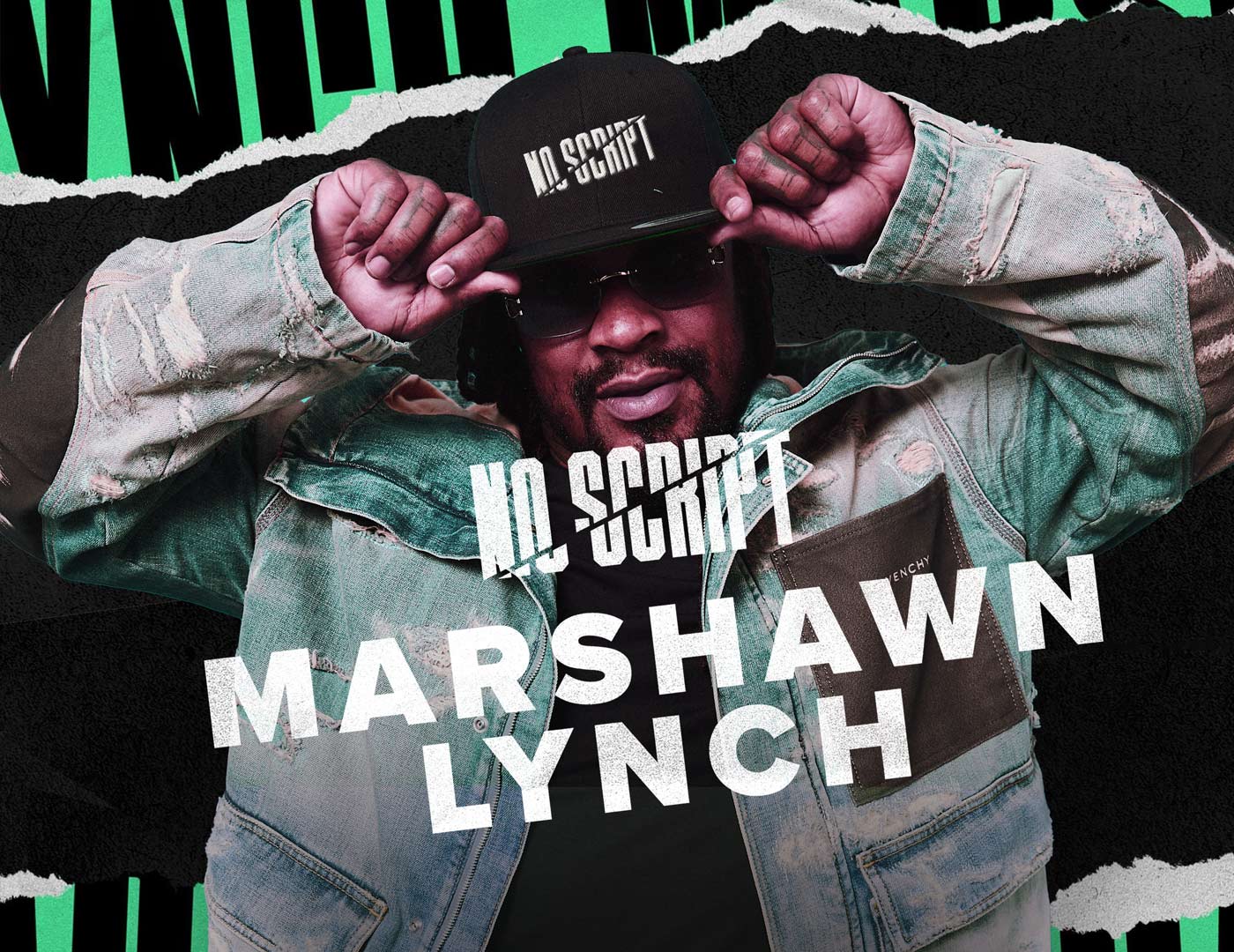
“I'm just here so I don't get fined." - NFL Legend Marshawn Lynch
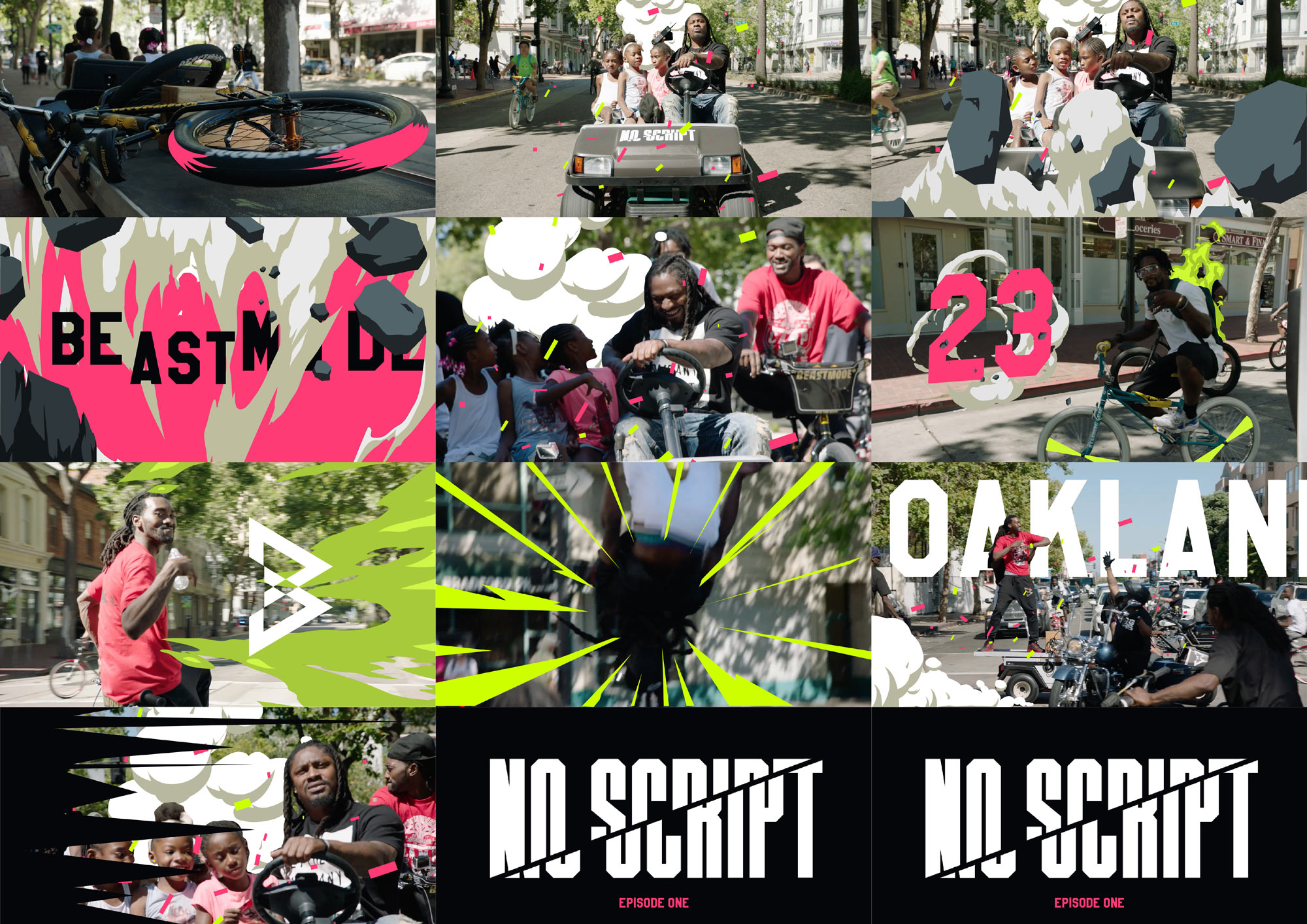
I led the creative design of the series identity and animated the opener, establishing a motion system and visual language that captured the show’s irreverent tone while remaining flexible across Facebook’s social surfaces. This included developing typography, pacing, and transitions that reinforced comedic timing and optimized clarity for mobile viewing. Beyond execution, I partnered with producers and strategists to ensure a cohesive brand world, bridging sports, comedy, and internet culture into a unified aesthetic that extended Bleacher Report’s voice into original entertainment. The result was a culturally resonant, platform-aware series that demonstrated how athlete-driven storytelling could evolve into premium social programming, helping set a precedent for future collaborations between media brands, talent-led production companies, and emerging distribution platforms. Animating the opening for No Script with Marshawn Lynch presented a unique creative challenge: the sequence had to establish the irreverent tone of the show while simultaneously aligning with Bleacher Report’s upcoming rebrand. We were evolving the brand’s visual language toward a more assertive, digitally native identity, anchored by the electric green that would become a signature color across platforms. The opener needed to feel unmistakably Marshawn, raw, playful, and unpredictable, while also functioning as a proof point for the new brand system. I led the design direction to ensure the motion language, typography, pacing, and graphic treatments balanced humor with clarity, using electric green as an accent that energized the frame without overwhelming the live-action footage. The goal was to create a sequence that could live both as entertainment packaging and as a brand signal for where Bleacher Report was heading visually. From a production standpoint, the collaboration required tight coordination with Beast Mode Productions, our internal studio team, and the show’s editors to build an opener that could adapt to evolving footage and comedic beats. Because the show thrived on unscripted moments, we had to design a flexible motion system that could integrate spontaneous clips, celebrity cameos, and situational humor without feeling templated. I worked closely with the production team to understand how scenes were being captured and where motion graphics could enhance timing, punchlines, or transitions rather than compete with them. This meant developing modular animation components, title cards, and transitions that could be recombined as episodes took shape in post, ensuring consistency while preserving the improvisational spirit that defined the series.
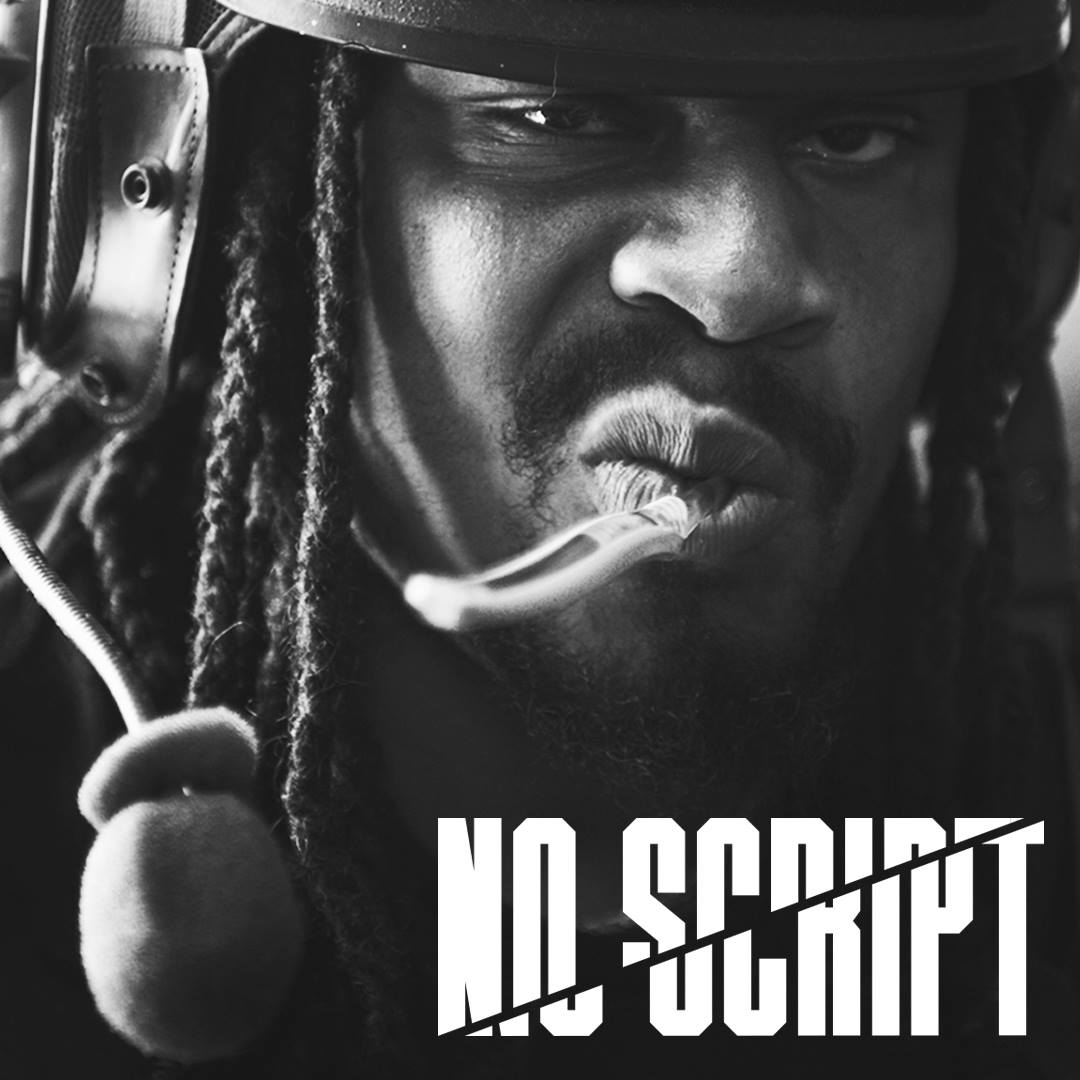

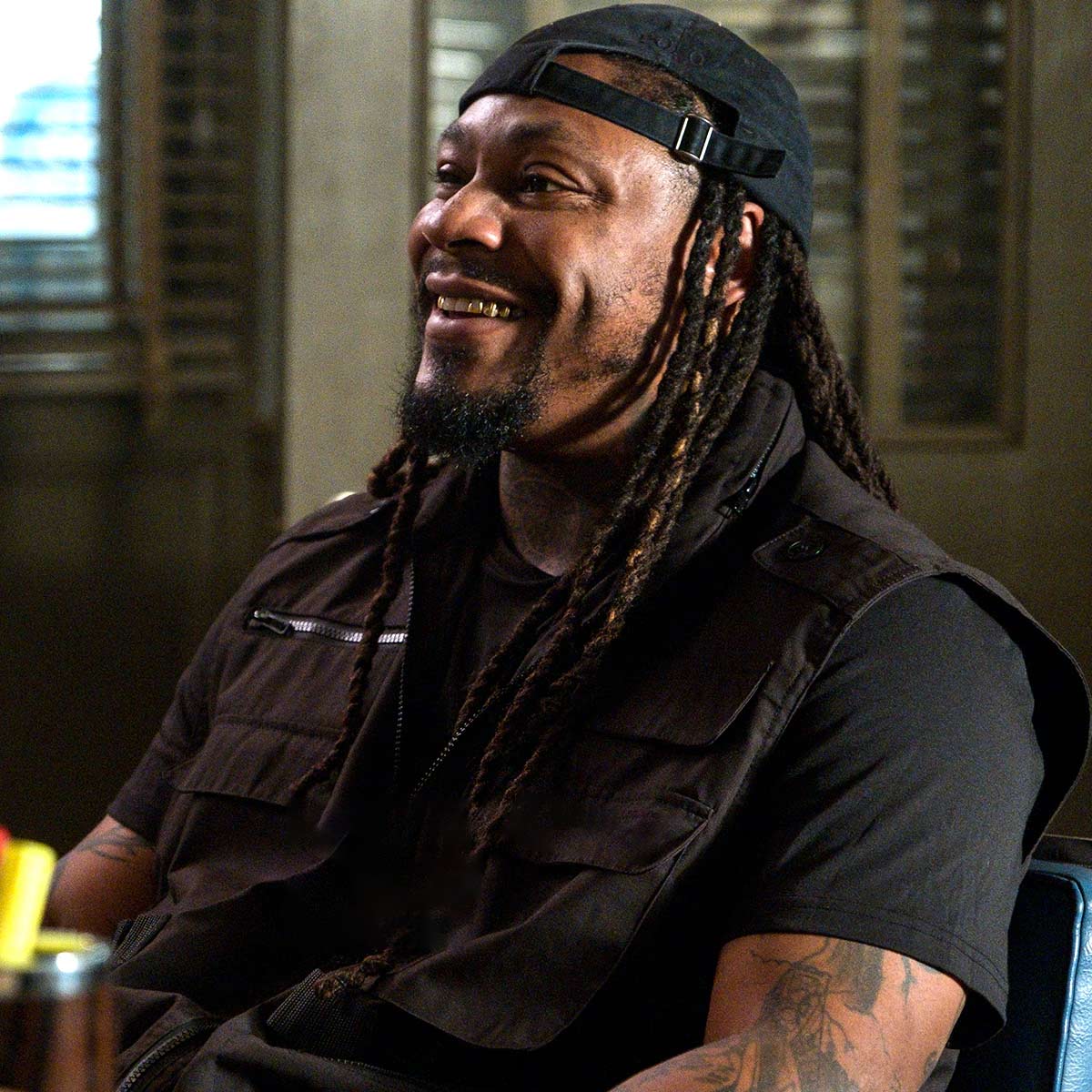

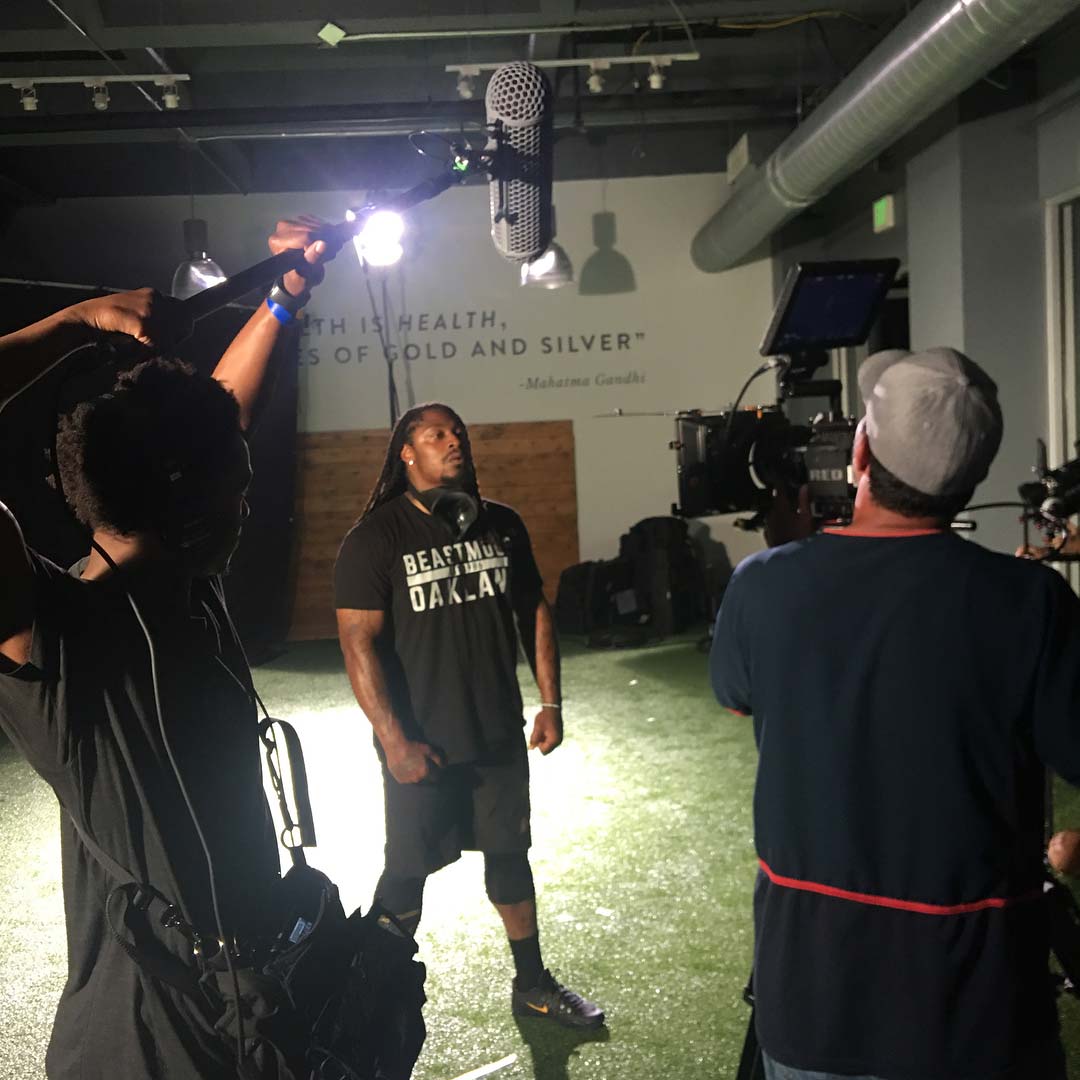

No Script with Marshawn Lynch lives in the space between intention and accident, where a camera follows a man who has built a legend out of saying very little and somehow ends up saying everything. It is not about stunts or spectacle so much as it is about presence, about what happens when a person refuses to perform in the expected ways and instead lets the world reveal itself through friction, confusion, and the occasional perfectly timed side eye. The show treats reality like a loose script that everyone else is trying to follow, while Marshawn flips to a blank page and proceeds anyway, reminding us that authenticity is often just the courage to exist without explanation and, if necessary, to answer every question with a shrug and a bag of Skittles.

No Script with Marshawn Lynch launched at a pivotal inflection point in digital media, when platforms were racing to define what premium social video could look like and how personality-driven programming could live natively inside feeds rather than behind paywalls. Premiering in October 2017 as part of Facebook Watch’s original programming slate, the eight-episode unscripted comedy reality series followed Marshawn Lynch as he placed himself in unpredictable, often absurd scenarios that blurred the boundaries between stunt, sketch, documentary, and social experiment. The show was high octane and packed with humor and absurdity in regular manner.

Facebook invested several million dollars into the show as part of its broader push into premium originals, signaling a serious commitment to building a new entertainment ecosystem that could compete with television while remaining native to mobile consumption. At a time when most social video was disposable and short form, the series represented a bet on personality, cultural relevance, and share ability as the new pillars of entertainment. The investment across shows like this or the iconic Ball in the Family featuring LaMelo, Lonzo, Gelo and of course their famous father Lavar Ball showcased a paradigm shift that the platform was taking towards video.
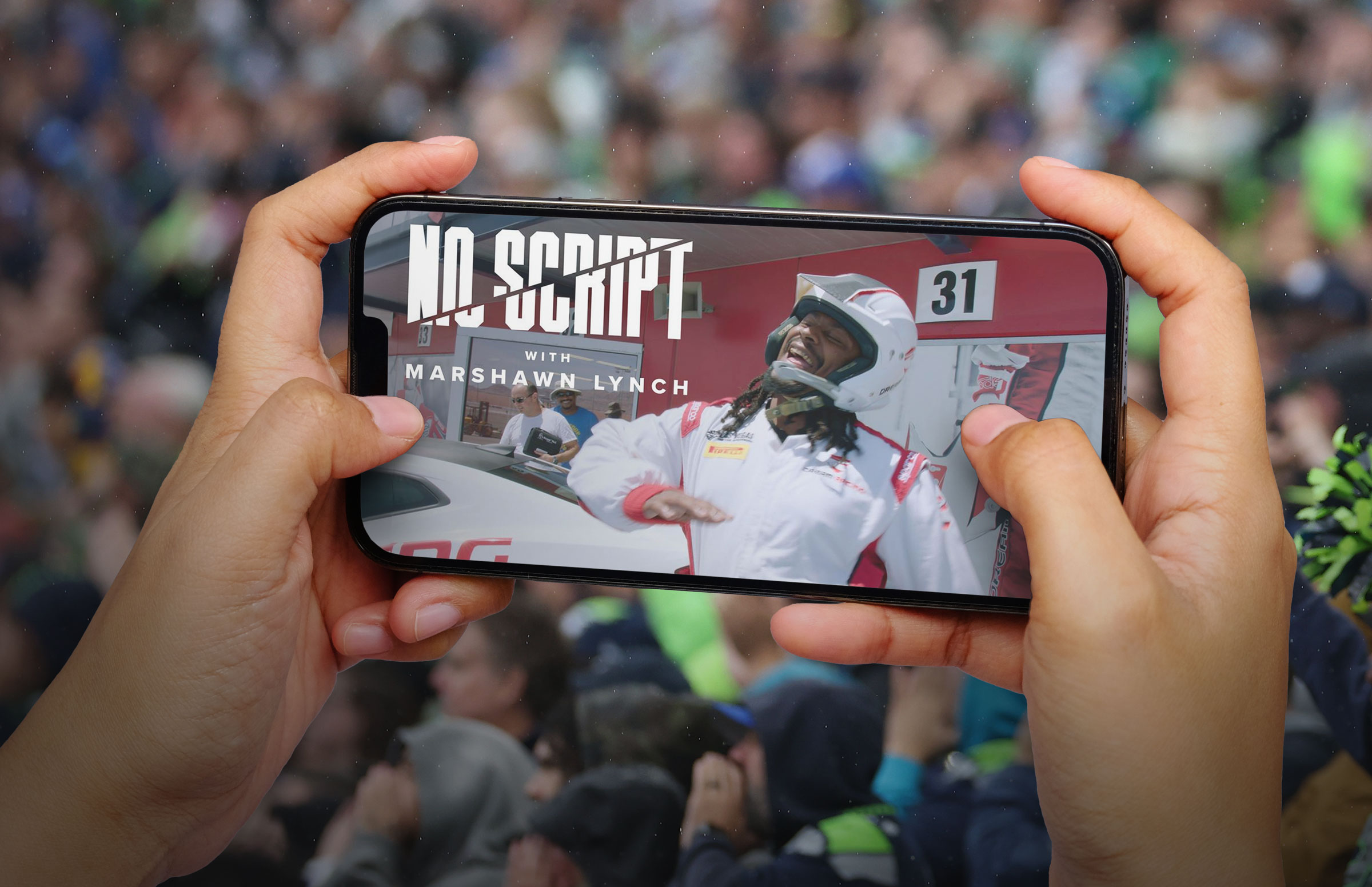
The series achieved significant reach across Facebook Watch through a distribution model built around episodes, trailers, cutdowns, and highly shareable clips optimized for feed behavior. Individual episodes reached multi-million view counts while short form segments circulated widely through reposts and algorithmic amplification, allowing the show to extend far beyond its initial audience. In aggregate, the ecosystem of episodes and derivative content generated tens of millions of views, demonstrating that social platforms could sustain premium programming when paired with a culturally resonant personality and a modular distribution strategy. This performance validated Facebook’s investment and provided a proof point that athlete-led content could drive engagement at scale without relying on traditional broadcast infrastructure.
The format relied on a deceptively simple premise. Place Marshawn in unfamiliar environments and allow authentic reactions to drive the narrative. Whether drifting race cars, piloting heavy machinery, confronting internet culture, or facing personal fears, the show leaned into his deadpan humor and unpredictable energy to create moments that felt unscripted yet editorially cohesive. The tone balanced spectacle with intimacy, presenting him not only as an NFL icon but as a curious participant navigating unfamiliar worlds. This tension between confidence and uncertainty became the emotional engine of the series, allowing audiences to see dimensions of Marshawn that extended beyond his public persona and see some crazy antics and situations they wouldn't expect.
As part of the Bleacher Report studio team, I helped shape the creative identity and visual language that framed the series, contributing design direction, animation for the opener, and strategic input during development. Working alongside Beast Mode Productions, we collaborated on how to translate Marshawn’s personality into a cohesive brand expression that could live across episodes, social cutdowns, and platform promotions. My focus was on ensuring the show felt unmistakably Marshawn while aligning with Bleacher Report’s evolving social-first aesthetic and Facebook Watch’s premium positioning. This required balancing authenticity with polish so the series could operate simultaneously as entertainment and brand signal.
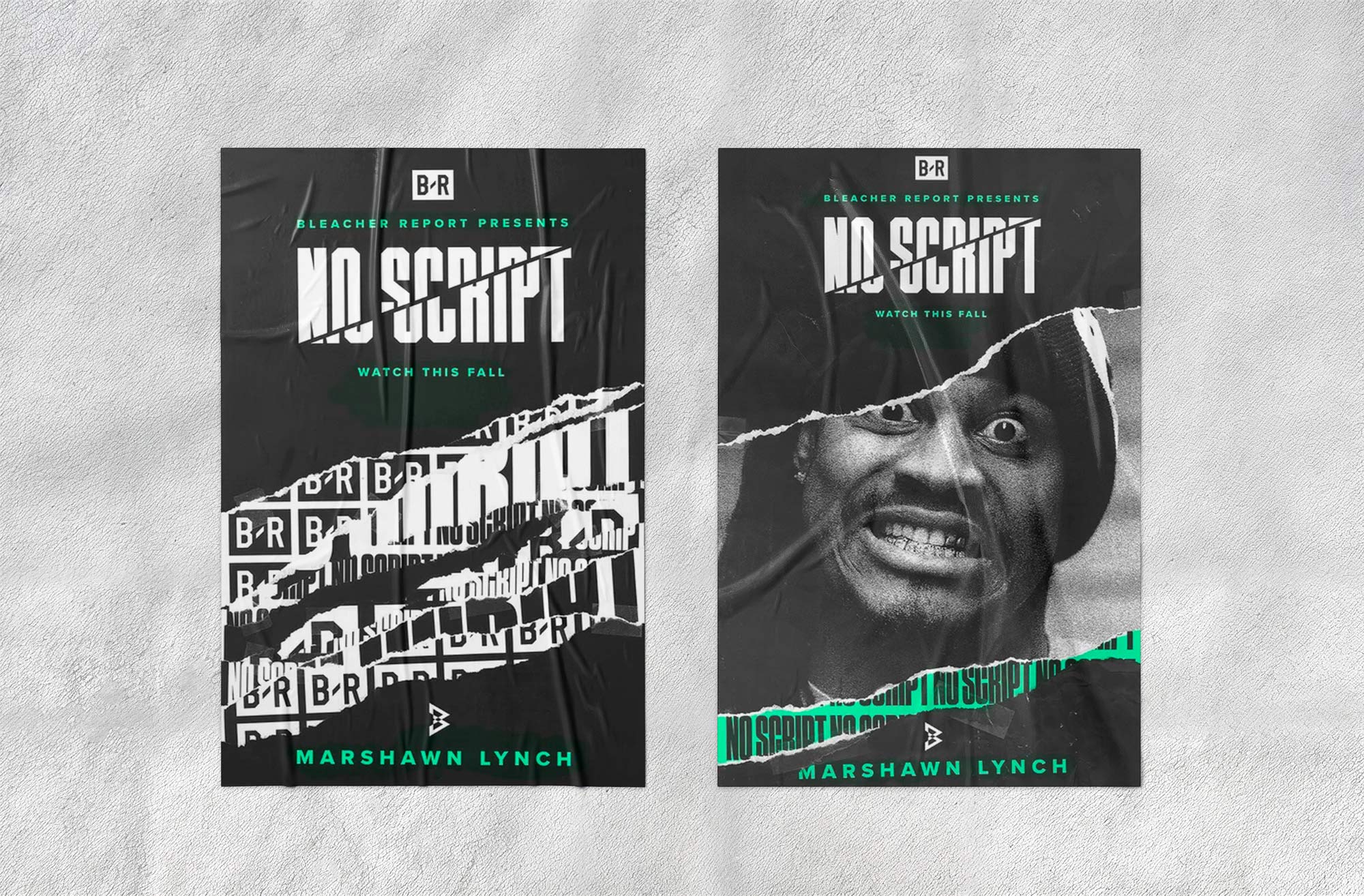
The project demanded tight collaboration across production, editorial, marketing, and platform teams to ensure that every asset reinforced the show’s tone while maximizing discoverability. We designed graphics, thumbnails, and promotional cutdowns that could be modularly adapted into trailers and social clips, enabling rapid distribution without diluting the visual identity. This ecosystem approach ensured that each touchpoint, from episode intros to teaser clips, functioned as both storytelling device and marketing engine. The goal was to create a feedback loop where content drove engagement and engagement drove discovery.
Animating the opener required distilling Marshawn’s cultural presence into a visual system that could introduce each episode with clarity, humor, and attitude while functioning across multiple formats and compression environments. We leaned into kinetic typography, bold pacing, and a color language aligned with Bleacher Report’s broader rebrand, ensuring the sequence worked as both narrative gateway and brand marker. The opener needed to maintain legibility and impact whether viewed in a feed, embedded player, or fullscreen environment, and it had to scale across aspect ratios without losing compositional integrity. This required designing motion with modularity in mind so elements could be repurposed across promotional assets.
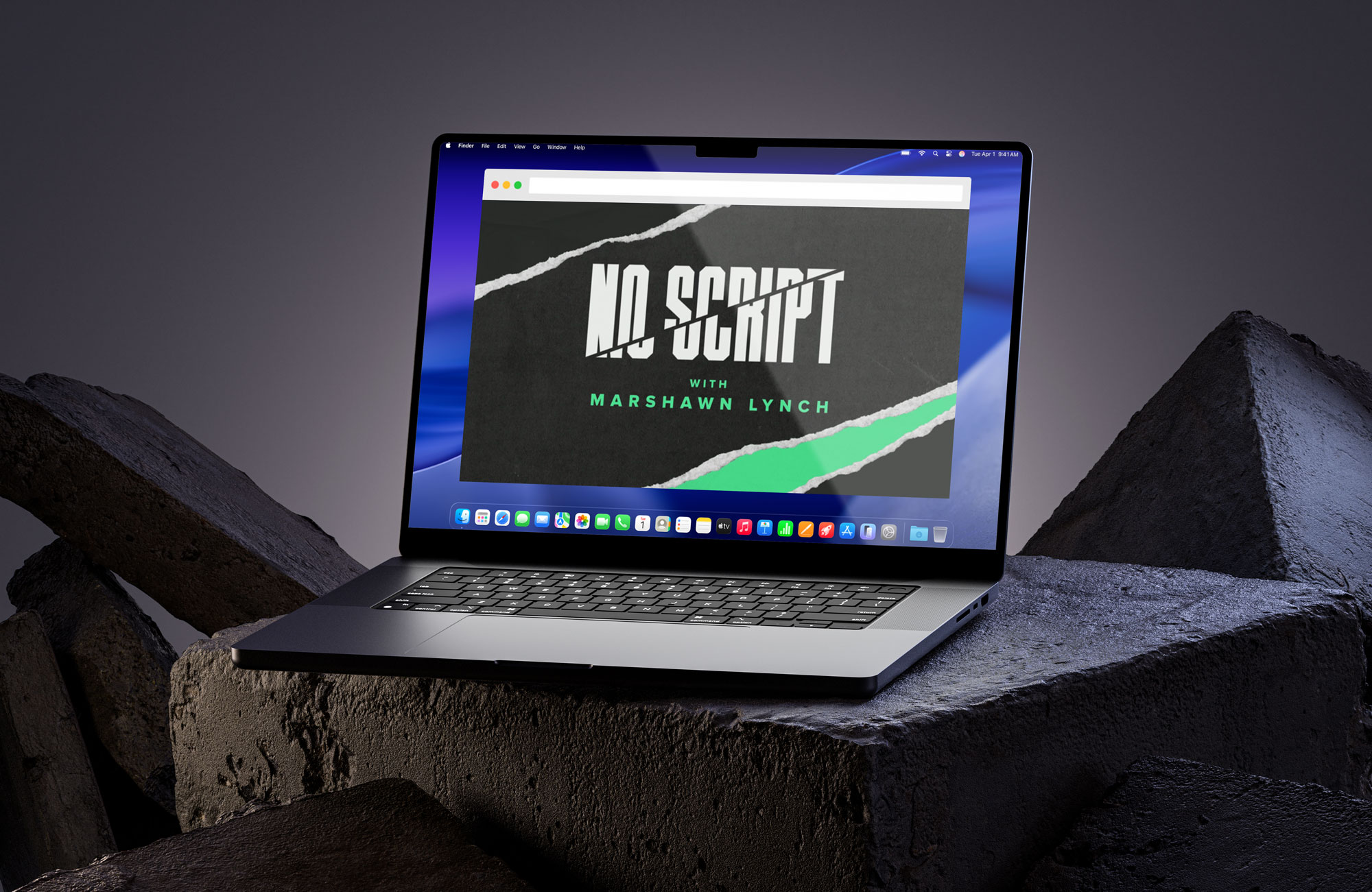
No Script with Marshawn Lynch demonstrated that athlete driven storytelling could thrive outside traditional broadcast frameworks and that personality could function as a scalable media format. The series expanded Marshawn’s cultural footprint while positioning Bleacher Report and Facebook Watch at the forefront of social first premium content. For me, the project represented a convergence of design, storytelling, and platform strategy, proving that strong creative systems can translate personality into scalable media experiences that resonate across audiences and formats. It showed that social platforms were not merely distribution channels but stages where new forms of entertainment could emerge. I worked closely with Kasper Nyman, Mike Blanch, and April Pasuca to develop the graphic look and package for the show.
Engagement rates consistently outperformed traditional sports media by a wide margin, reflecting a community that didn’t passively consume but actively participated. Likes were only the surface. The real signal lived in comment threads that unfolded like live debates, inside jokes that evolved post to post, and shares that carried content into private group chats where fandom actually breathes. While legacy outlets optimized for reach and impressions, we optimized for resonance, designing posts that invited reaction, identity signaling, and social currency. The result was a feedback loop where fans felt seen, responded in kind, and returned daily, turning engagement from a metric into proof of cultural relevance.

Facebook Watch Originals emerged at a moment when social platforms were aggressively redefining themselves as full-fledged entertainment ecosystems rather than passive distribution channels, with Facebook positioning Watch as a destination for episodic programming that could live natively inside the feed while still delivering the depth and continuity of traditional television, thereby training audiences to expect serialized storytelling, celebrity-driven formats, and premium production values within an environment historically associated with short-form and user-generated content. The platform’s design centered on algorithmic discovery and social sharing, which meant that shows needed to function not only as complete episodes but also as modular fragments capable of circulating independently, shaping creative strategies around personality, immediacy, and moments that could travel beyond the Watch tab into the broader social graph.
Facebook’s financial commitment to Watch Originals underscored the seriousness of this strategic pivot, with the company allocating substantial budgets to long-form programming and signaling a willingness to invest millions into select projects that could demonstrate the viability of social-first premium content while attracting advertisers eager to align with brand-safe, culturally relevant video. The revenue model emphasized ad-supported viewing and creator partnerships, encouraging experimentation with formats that could sustain engagement and repeat viewing while rewarding shows that generated high completion rates and shareable moments, positioning series like No Script with Marshawn Lynch as both entertainment properties and proof of concept for a new monetization framework that blended media, technology, and community behavior. As the platform matured, Facebook Watch reported hundreds of millions of monthly viewers and tens of millions of daily users who spent meaningful time within the video environment, demonstrating that while Watch represented only a portion of Facebook’s overall user base, the audiences who entered the ecosystem were highly engaged and receptive to serialized content that rewarded attention and fostered conversation.
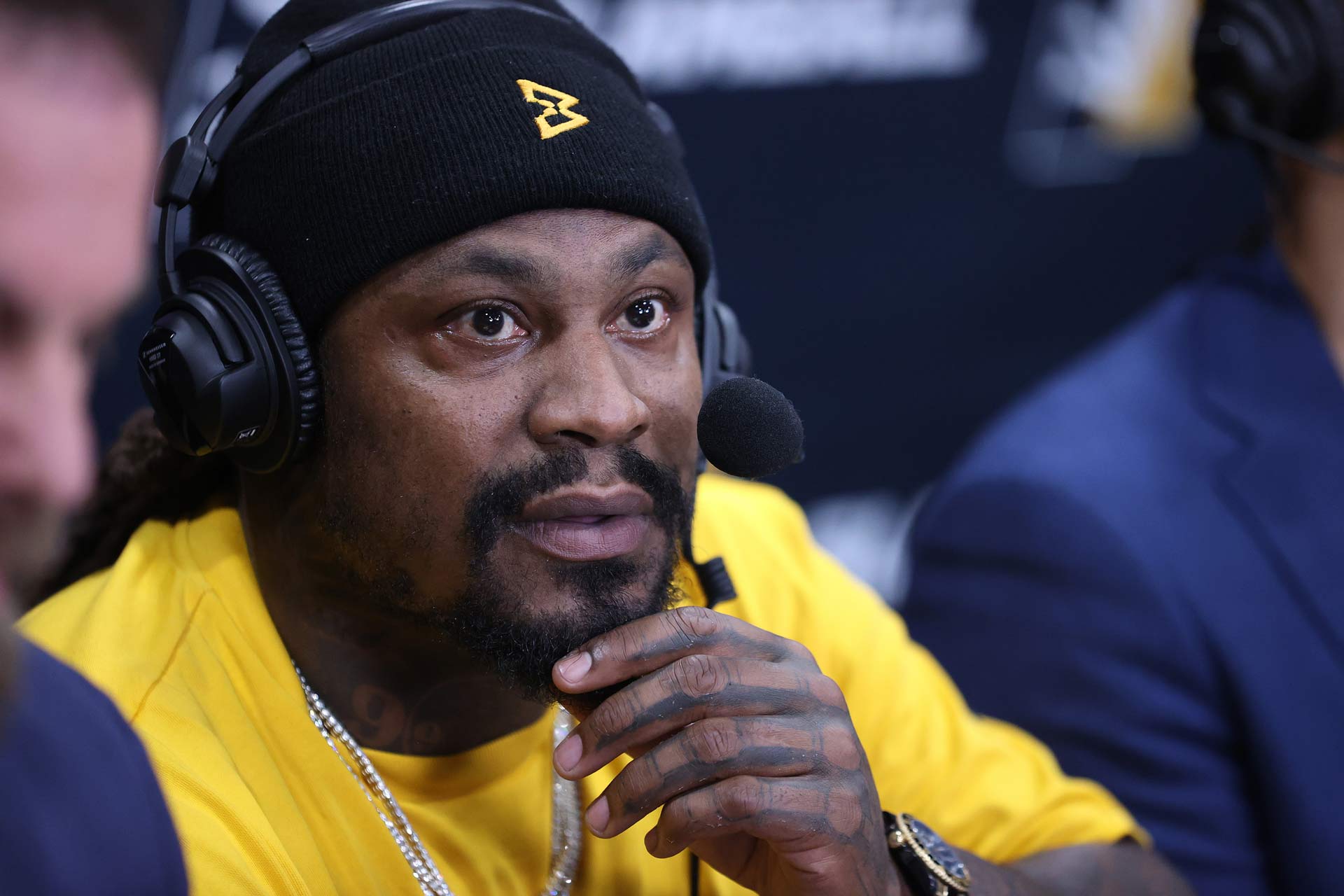
Within this landscape, Marshawn Lynch emerged as an ideal protagonist whose persona existed at the intersection of myth, resistance, humor, and authenticity, shaped by a career defined as much by his refusal to conform to media expectations as by his dominance on the field, creating a paradox that made him endlessly compelling in unscripted environments where unpredictability was the primary narrative engine. His now iconic media day refrain about being present only to avoid fines became a cultural shorthand for defiance wrapped in deadpan delivery, revealing a performer who understood the spectacle of media while simultaneously refusing to play by its rules, a tension that translated seamlessly into a show built on unscripted encounters.
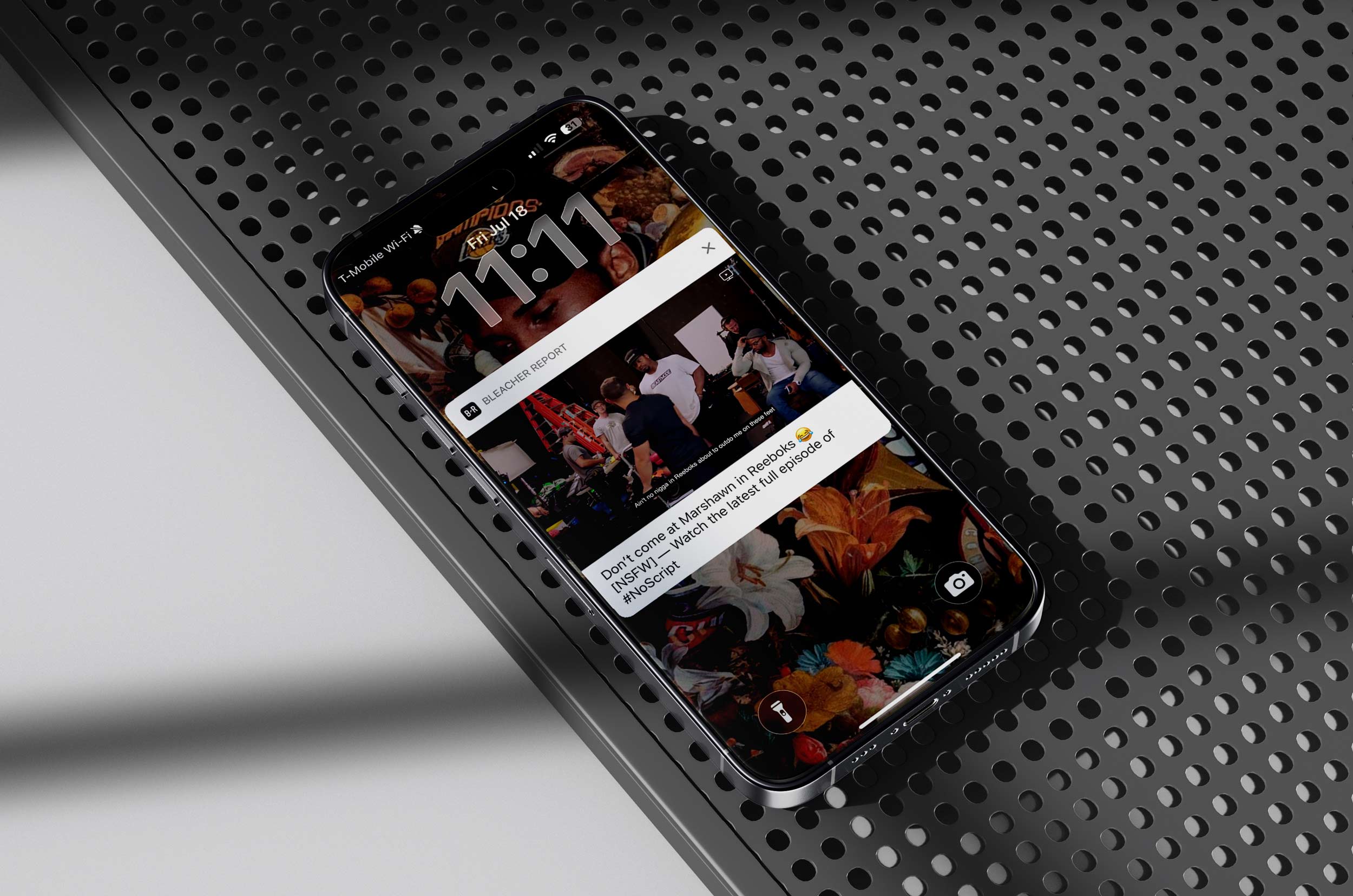
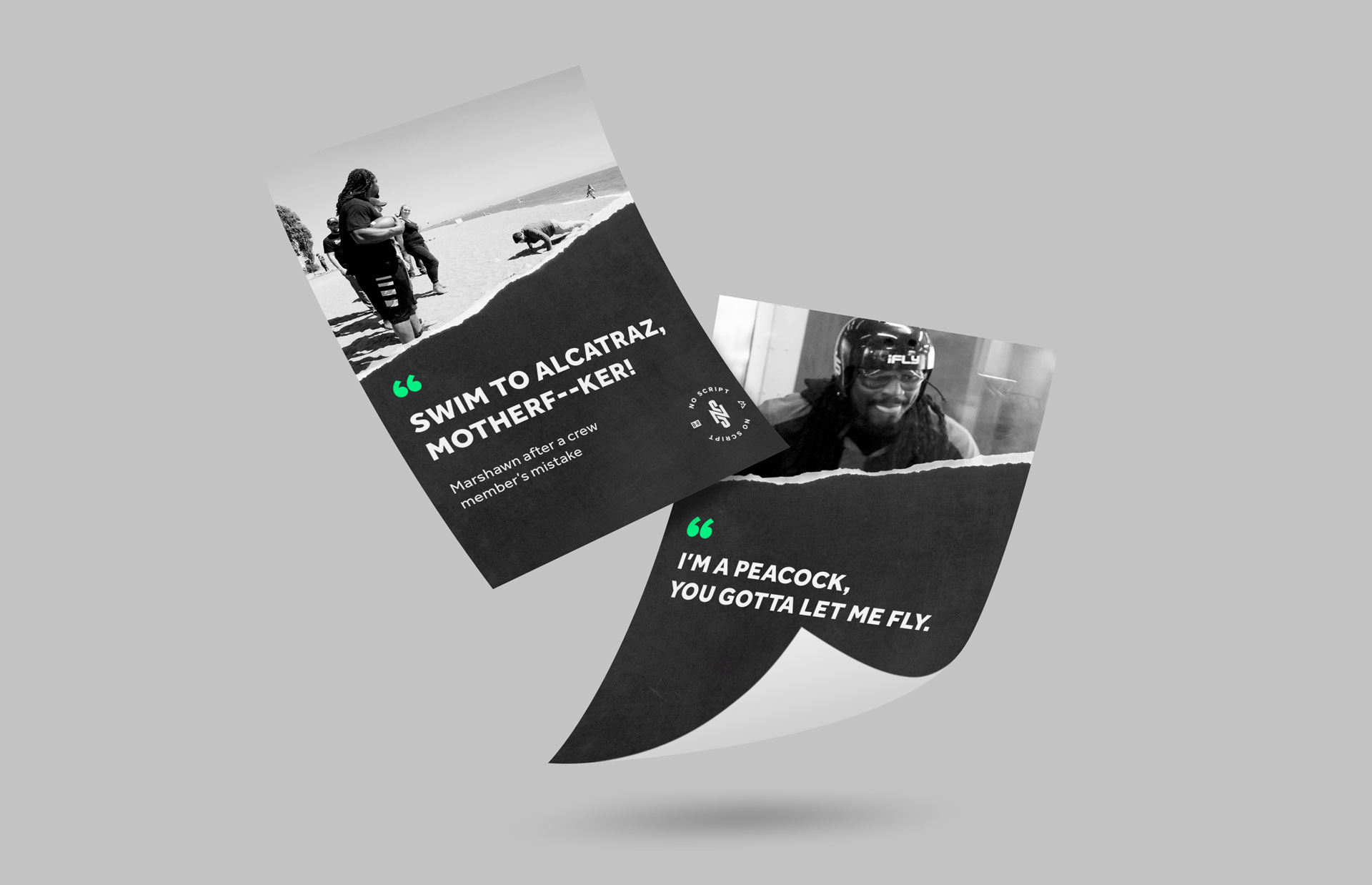
To drive viewership for No Script with Marshawn Lynch, we leaned heavily into Bleacher Report’s app ecosystem and push notification infrastructure, treating distribution as an extension of storytelling rather than an afterthought. Our push strategy was built around urgency, personality, and cultural timing, using Marshawn’s voice and tone to craft notifications that felt less like marketing and more like a message from a friend dropping a must-see moment. Instead of generic alerts, we framed notifications around curiosity and humor, teasing scenarios and reactions to prompt taps, which significantly increased open rates and created immediate traffic spikes at episode launch.
In the context of Facebook Watch Originals, Marshawn’s personality functioned as both narrative engine and distribution strategy, generating moments that were inherently clip-worthy while carrying cultural symbolism that ensured those moments traveled across feeds, conversations, and remix culture, amplifying reach beyond the platform itself. The success of No Script was rooted not in forcing him into scripted scenarios but in creating environments where his instincts could collide with unfamiliar worlds, producing a form of entertainment that felt spontaneous, participatory, and deeply human, ultimately exemplifying the promise of Watch Originals by proving that personality could serve as format, authenticity could drive engagement, and shareability could redefine how success was measured in the social video era. Rather than adopting the polished media persona typical of star athletes, Marshawn leaned into unpredictability and deadpan humor, cultivating an aura of authenticity that resonated with fans who saw in him a refusal to perform celebrity in conventional terms, making him uniquely suited for a format that depended on genuine reactions rather than scripted dialogue.
For the first episode, the theme for the premiere centered on placing Marshawn inside a high-performance drifting environment that demanded technical discipline and restraint, then observing what happened when his instinct-driven style collided with the rigid mechanics of professional motorsport. Under expert guidance and with comedian Lil Rel Howery amplifying the tension as a comedic foil, Marshawn translated physics lessons on traction and centrifugal force into tire smoke and near misses that established the show’s core grammar of spectacle grounded in real science. The episode set the tonal blueprint for the series by balancing adrenaline, humor, and education while revealing a version of Marshawn that was curious, fearless, and disarmingly candid when confronted with systems he could not dominate through sheer will. Premiere episodes and bonus clips circulated widely on Facebook Watch and social feeds, establishing early multi-million view momentum through shares and cutdowns.
The next episode explored Marshawn as a reluctant mythological figure by placing him inside a sci-fi parody scenario that riffed on space opera tropes while allowing him to improvise within elaborate sets and costumes that heightened the absurdity of his deadpan delivery. Rather than transforming into a traditional hero, he remained unmistakably himself, creating humor through understatement and awkward pauses that contrasted with the grandiosity of the environment and highlighted the show’s commitment to unscripted authenticity. The production design emphasized playful spectacle while his interactions blurred the line between performance and reality, reinforcing the idea that Marshawn’s cultural power lies in resisting transformation rather than embracing it.
This episode transformed a neighborhood sandwich shop into a stage for improvisational humor by placing Marshawn behind the counter, where deadpan service and unconventional menu experiments disrupted customer expectations and created comedy through restraint rather than spectacle. The humor emerged from timing and contrast, as patrons struggled to reconcile his physical presence and stoic demeanor with the mundanity of the setting, revealing his ability to generate entertainment without elaborate setups. By proving that charisma can transform even the most ordinary spaces, the episode reinforced the show’s thesis that authenticity, not scale, is the true engine of engagement. Relatable real-world settings drove strong comment engagement and shareability, extending the episode’s lifecycle through social reposts.
Beginning with Marshawn reacting to viral videos and culminating in an indoor skydiving experience, this episode explored the gap between mediated spectacle and embodied sensation while positioning him as both consumer and participant in internet culture. A scientist explained the physics of freefall, grounding the experience in tangible science while Marshawn navigated the disorienting sensation of controlled flight, bridging digital voyeurism with physical adrenaline. The episode underscored the show’s ability to connect online trends with lived experience, reinforcing its relevance within a platform built on viral circulation.
Turning the lens inward, this episode reframed Marshawn’s Beast Mode identity as both myth and lived discipline by subjecting the production crew to an intense workout that revealed the physical and mental rigor behind his persona. What began as demonstration evolved into collective trial, with exhaustion, camaraderie, and humor emerging organically as crew members struggled to keep pace with drills that were routine for Marshawn. The episode humanized both subject and production team while reinforcing his leadership style as participatory rather than performative, inviting others into the process rather than showcasing strength in isolation.
By placing Marshawn in an amusement park environment where his reluctance to ride roller coasters challenged perceptions of invulnerability, this episode explored fear as narrative engine and created humor through empathy rather than spectacle. His hesitation and negotiation with himself revealed a relatable dimension of courage defined by acknowledgment rather than conquest, allowing audiences to connect with a more human side of an athlete often associated with toughness. The episode expanded the emotional range of the series while reinforcing authenticity as its defining characteristic.
Embracing the unpredictability promised by the show’s title, this episode presented Marshawn with a sequence of unconventional challenges designed to test adaptability and presence in unfamiliar environments where preparation offered little advantage. The narrative unfolded through real-time reactions that allowed coherence to emerge organically, reinforcing the unscripted nature of the series and highlighting his curiosity as a defining trait. By centering uncertainty rather than spectacle, the episode emphasized that the show’s true subject was Marshawn’s evolving relationship with the unknown.
The finale returned to spectacle with demonstrations involving liquid nitrogen and controlled explosions, blending scientific education with visceral awe as Marshawn encountered forces that demanded respect and caution. Guided by a scientist, the experiments balanced danger and wonder while Marshawn’s reactions grounded the spectacle in human curiosity and skepticism. The episode encapsulated the series’ core themes of risk, humor, and discovery, leaving audiences with the sense that the journey had been less about stunts and more about watching a cultural icon navigate unfamiliar worlds with authenticity.
Working on No Script with Marshawn Lynch was an exercise in translating a larger-than-life personality into a cohesive, platform-native experience that could thrive within the fast, fragmented realities of social video while still feeling premium, intentional, and culturally grounded. As part of the Bleacher Report studio team collaborating with Beast Mode Productions, I contributed creative direction, design strategy, and animation for the opener, helping to shape a visual and tonal framework that honored Marshawn’s authenticity while aligning with Facebook Watch’s ambition to redefine episodic content for mobile audiences. Collaborating with Quickframe on the animated segments for No Script with Marshawn Lynch created a natural continuity with the motion language we had already established through projects like Gridiron Heights, allowing us to tap into a production pipeline and creative shorthand that balanced speed with high-fidelity execution.
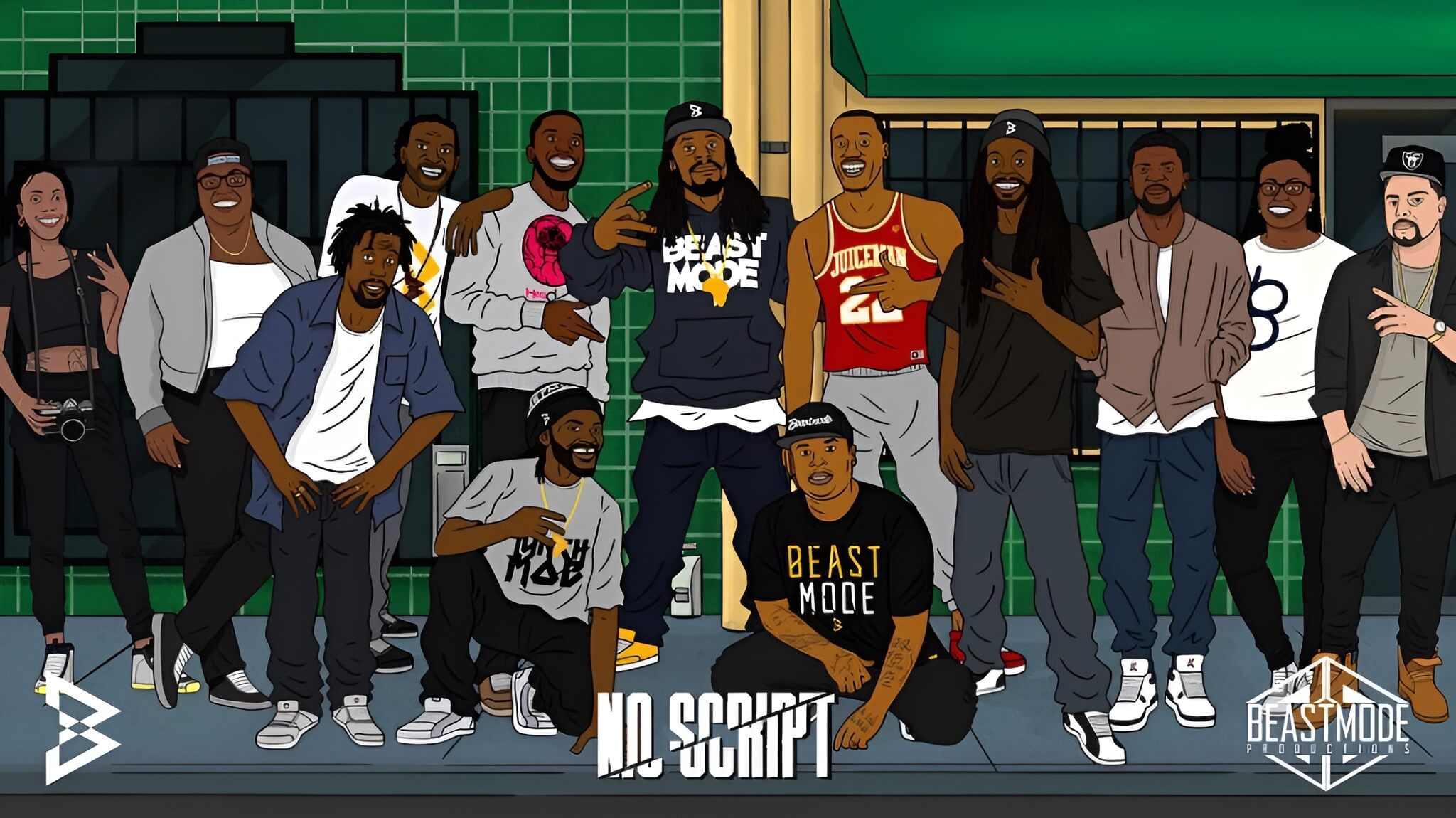
The challenge was to build a system that could function across full episodes, trailers, thumbnails, and cutdowns, ensuring that every touchpoint carried the same irreverent energy and clarity of voice, even as assets were repurposed and recompressed across formats and feeds. Navigating tight production windows shaped by Marshawn’s active NFL schedule required adaptability and precision, reinforcing the importance of modular design and cross-functional collaboration in delivering high-impact work under real-world constraints. The project ultimately deepened my understanding of how personality can operate as a scalable media format, and how thoughtful creative systems can translate spontaneity into a durable brand experience that resonates across platforms and audiences.
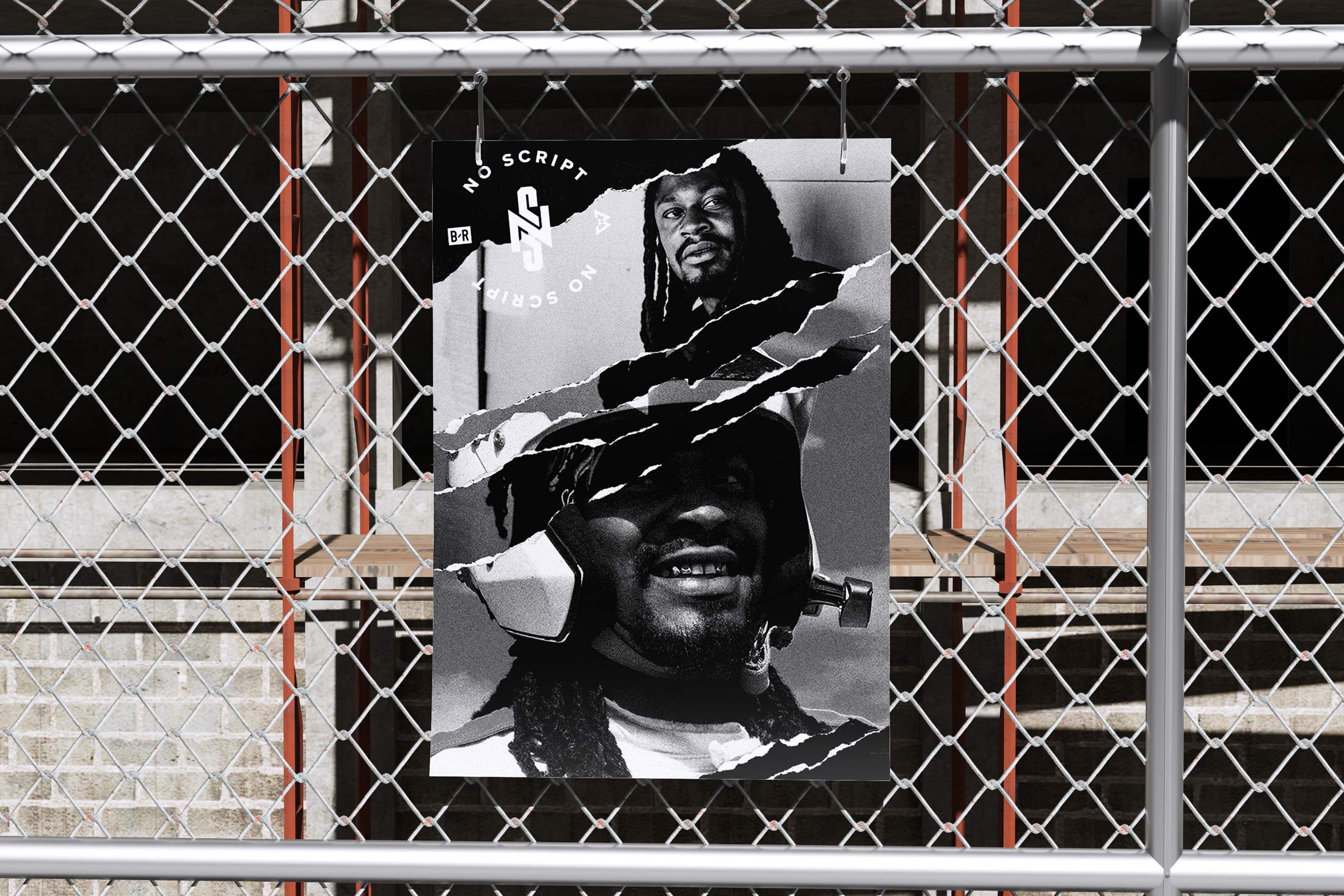
Logistically, the realities of filming with an active NFL player added another layer of complexity. Marshawn’s schedule was shaped by team workouts, travel, recovery, and sponsor obligations, which compressed shoot windows and often shifted timelines with little notice. Our team had to remain agile, designing and iterating the opener in parallel with production while footage arrived in waves between commitments. Coordinating approvals with Marshawn’s team required sensitivity to his time and priorities, and we built a workflow that allowed for rapid feedback loops without disrupting his training schedule. The process reinforced the importance of adaptability in athlete-driven content: balancing brand rigor with real-world constraints to deliver a cohesive, high-energy opener that captured Marshawn’s presence, supported the show’s comedic rhythm, and signaled the next chapter of Bleacher Report’s visual identity.

From a creative standpoint, the project reinforced the idea that strong format design and clear tonal frameworks can outlive the platform they were built for, influencing future productions and shaping how talent is perceived within the entertainment ecosystem. By helping establish a visual and narrative language that supported Marshawn’s transition from sports icon to unscripted personality, the work contributed to a broader shift in how athlete-led media is conceived and distributed. The series stands as an early example of how social platforms can incubate formats that later migrate to larger streaming environments, and it remains a testament to the power of authenticity as a scalable creative strategy. At the end of the day the show was just a good time, and when you have fun on camera, good content ensues.
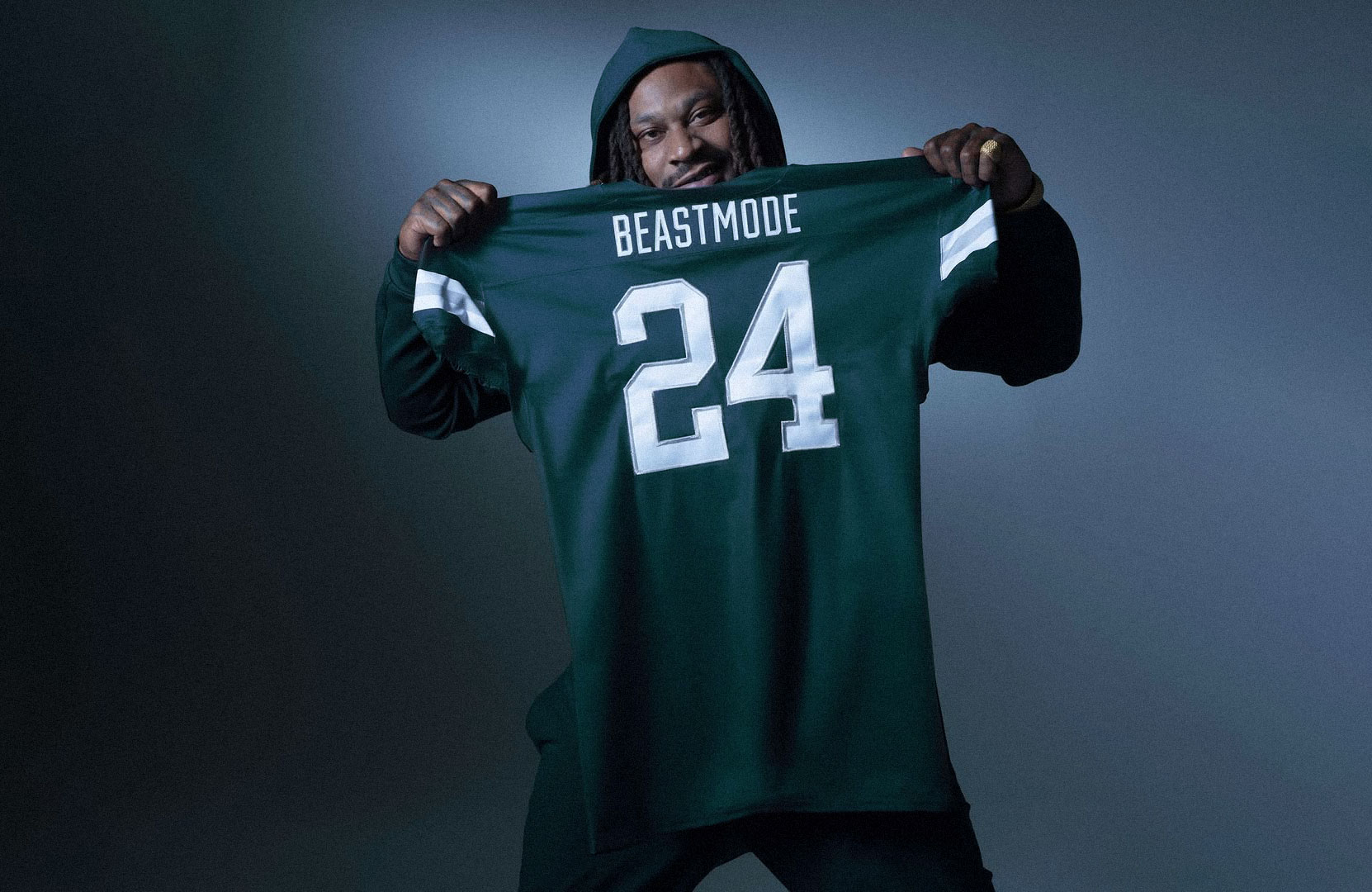
Working on No Script with Marshawn Lynch was not only an opportunity to help shape a social-first premium series at the dawn of Facebook Watch Originals, but also a project that revealed how personality-driven storytelling could extend far beyond a single platform and evolve into a broader media trajectory for its central figure. By building a format that leaned into Marshawn’s authenticity, unpredictability, and deadpan humor, the show helped reframe him in the public imagination from a media-averse NFL star into a compelling unscripted performer whose presence alone could anchor episodic entertainment. The success of the series demonstrated that audiences were eager to engage with athletes outside the confines of traditional sports coverage, particularly when the content allowed for spontaneity, vulnerability, and cultural play. (As a prize for scrolling all the way to the bottom of this portfolio page, I humbly as you to enjoy a bonus clip from the show below)
The impact of the show could be seen in Marshawn’s continued expansion into unscripted television and streaming projects, where the core premise of placing him in unfamiliar environments and allowing his natural reactions to drive the narrative became a repeatable format. Subsequent projects, including his later appearances in city-based travel and culture programming for major streaming platforms such as Amazon Prime Video, echoed the DNA established in No Script, positioning him as a guide through urban landscapes, subcultures, and unexpected experiences. These shows built upon the foundation laid by the Facebook Watch series, proving that the combination of athlete mythology, humor, and real-world exploration could translate across platforms and audiences.
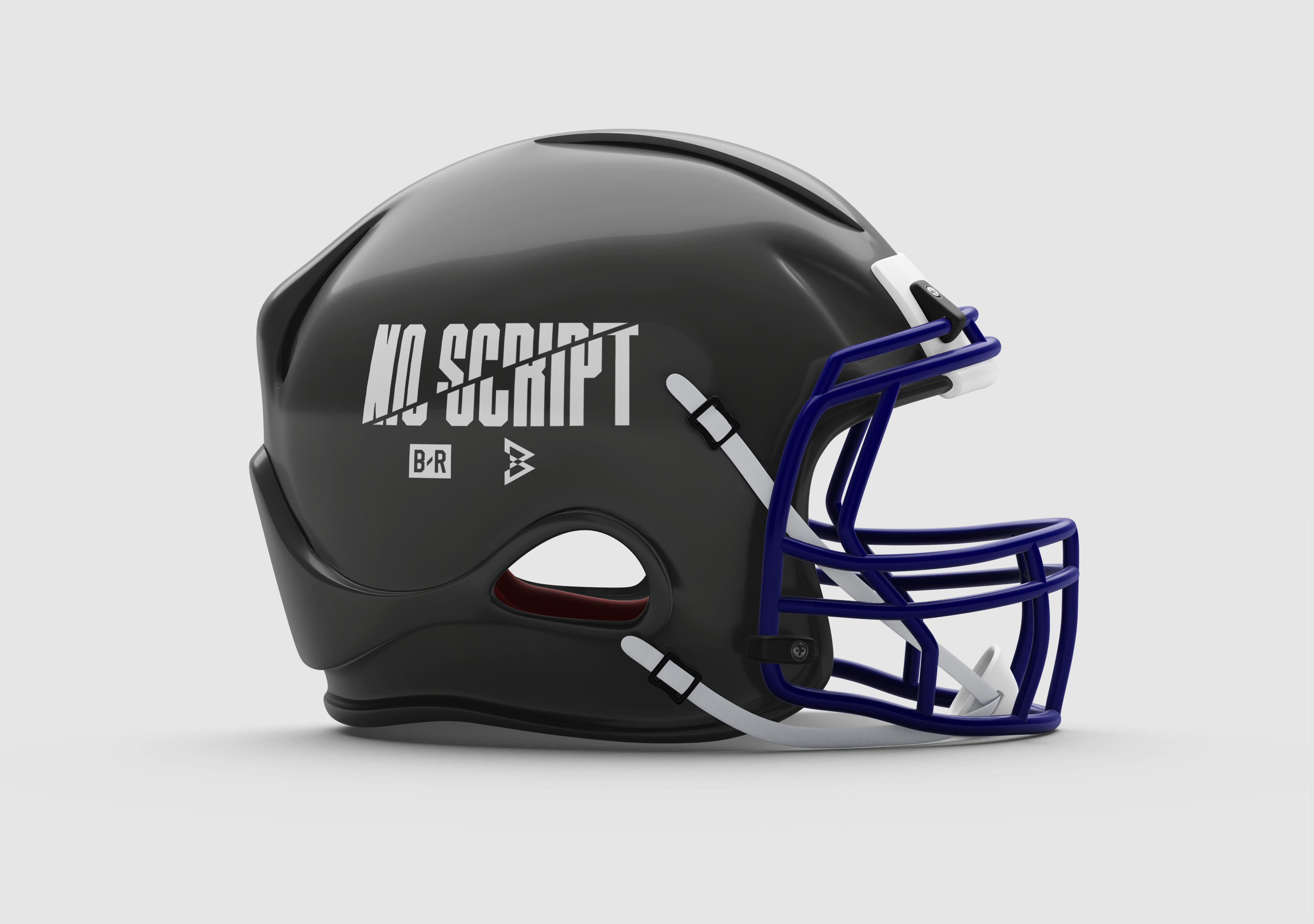
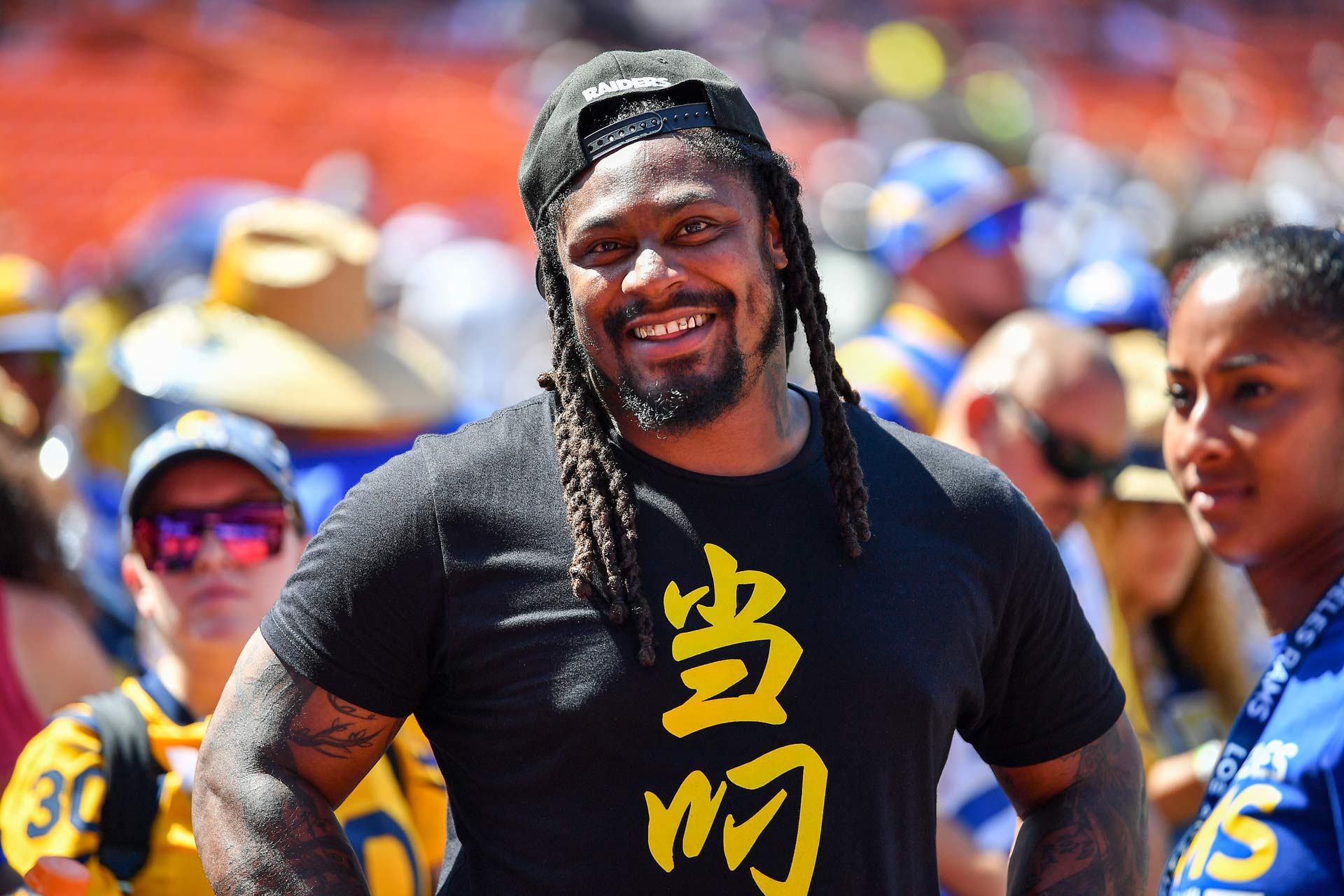
As an extra extra bonus for scrolling all the way to the bottom of this page and watching all eight episodes of No Script (At least I hope you watched a couple if not the whole series) I would love to share a fun behind the scenes clip of Marshawn on the Bart after a game, you can see some of the cameras in the background and how he interacts with the fans with his signature BeastMode hat on. This was a fun show to work on and collaborating with Neil and the rest of the studio team at Bleacher Report was a great experience, but I gotta give a huge shoutout to my desk neighbor Shak for pulling me into so many brainstorms for this show.
Key Collaborators: Shakir Standley, Dan Worthington, Sam Toles, Mike Blanch, George Anagnostakos, Khristopher Sandifer, Bryon Sheng, Diaunte Thompson, Meghan-Michele German, Karin Hammerberg, Neil Punsalan, April Pasuca, Kasper Nyman, Kenny Dorset, Christ Perez, Bennett Spector, Courtney Vincent, Lance Becker, Ambrose Salmini
Tools: After Effects, Photoshop, Illustrator, Figma, Cinema 4D, and Sketch
Deliverables: Show Package, Content Series, Branding