

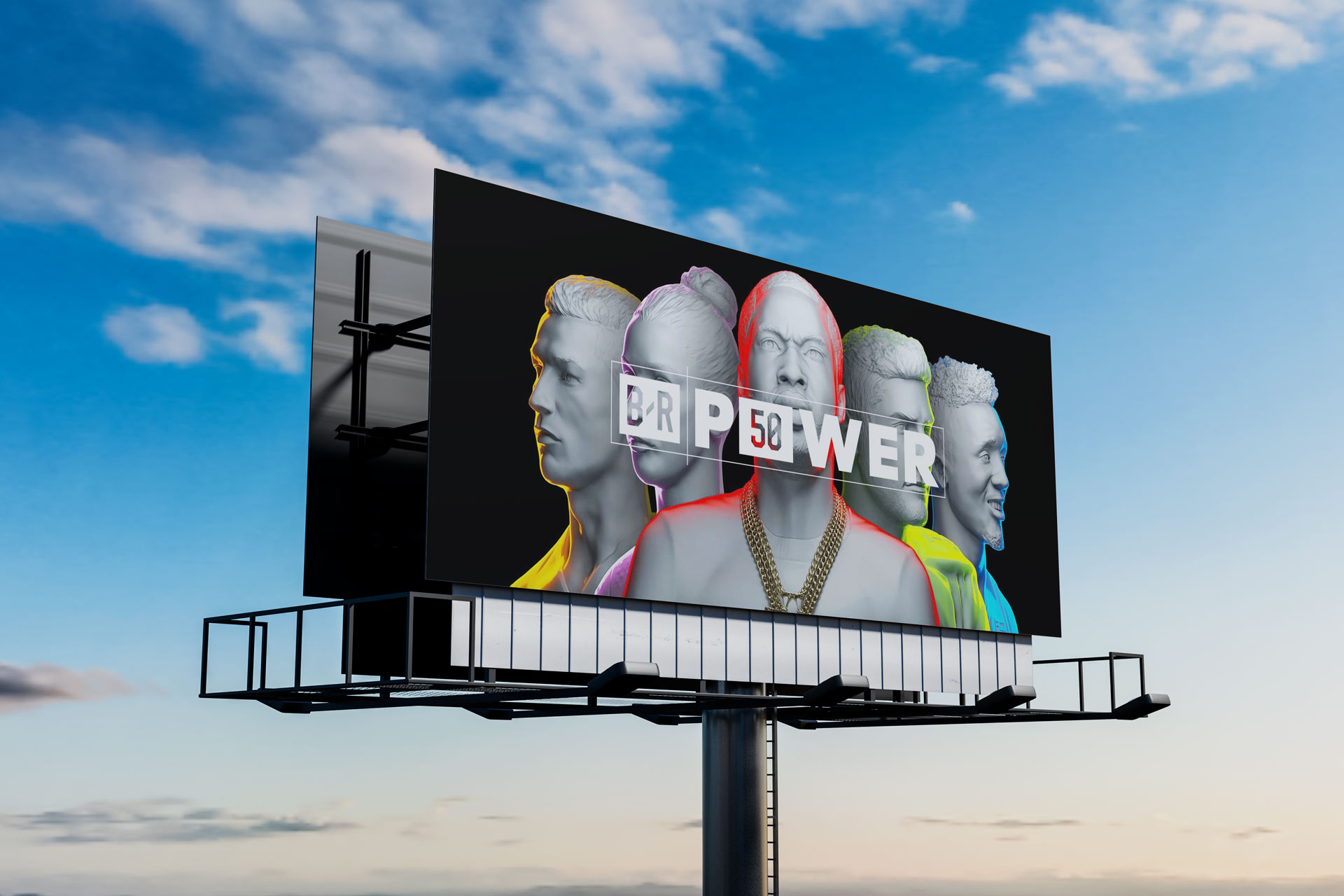
The B/R Power 50 was Bleacher Report’s answer to Time’s Most Influential or Forbes’ Power lists, a definitive ranking of the athletes and cultural figures shaping sports in real time. I served as Design Lead, partnering with I Love Dust to create the signature 3D render “statues” that gave each honoree an iconic presence. These visuals transformed the list into something larger than content. They became symbols, instantly shareable and immediately recognizable across platforms. My role extended beyond visuals into creative direction and strategy. Working alongside more than thirty journalists, I built a design system that could scale across fifty unique profiles and longform essays while still feeling unified and premium. From typography and layouts to social assets and motion graphics, I ensured every touchpoint carried the same prestige. The result was not only a highly engaged digital experience but also a cultural talking point, sparking debate and recognition on the same level as legacy lists like Time 100. The Power 50 became a statement piece for Bleacher Report, positioning the brand as an authority on influence in sports culture. By marrying bold design with rigorous journalism, we created a product that lived far beyond its launch, serving as proof that digital-first editorial could carry the weight and cultural resonance of traditional institutions but still retain the social first packaging and digestability that it was known for from our social media accounts and presence.


The B/R Power 50 featured 47,000 words by 39 writers, 50 social posts, and 12 videos, engaging millions of fans across platforms and setting a new benchmark for sports culture storytelling.
The Power 50 was one of the most challenging projects I worked on at Bleacher Report because it was not a single piece of content but an entire ecosystem. With thirty-nine writers producing over 47,000 words across fifty profiles, plus a dozen videos and fifty unique social posts, the biggest hurdle was finding a way to unify all of these moving parts into one coherent vision. Influence itself is hard to define, and our job was to create a visual and editorial package that not only captured the nuance of the stories but also carried the authority of a tentpole list that could stand beside Time 100 or Forbes. From a design perspective, the challenge was scale and consistency. Partnering with I Love Dust on the 3D statues gave us the iconic look we needed, but integrating those renders into a flexible design system was another story. Each profile needed to feel distinct while still belonging to the same family. I created type hierarchies, grids, and layout frameworks that could handle both longform features and quick-hit social adaptations, while also building motion toolkits for video editors. The difficulty was in maintaining prestige across platforms that naturally have different levels of attention and engagement, without letting the design collapse under its own weight. Another major challenge was timing. The Power 50 had to launch as a cultural tentpole and could not miss its window, which meant managing a flood of assets from writers, editors, designers, and developers under a tight deadline. My role became part creative direction, part orchestration. I had to move between shaping the brand identity, collaborating on renders, and refining layouts while also making sure workflows were efficient enough to handle the volume. The pressure was immense, but it forced us to be decisive, to prioritize clarity over perfection, and to trust the system we had built. The result was a package that felt seamless, authoritative, and worth the scale of the effort to show that Bleacher Report had come a long way from it's initial days of just slideshows, it was not not just moving the culture but also shaping it.
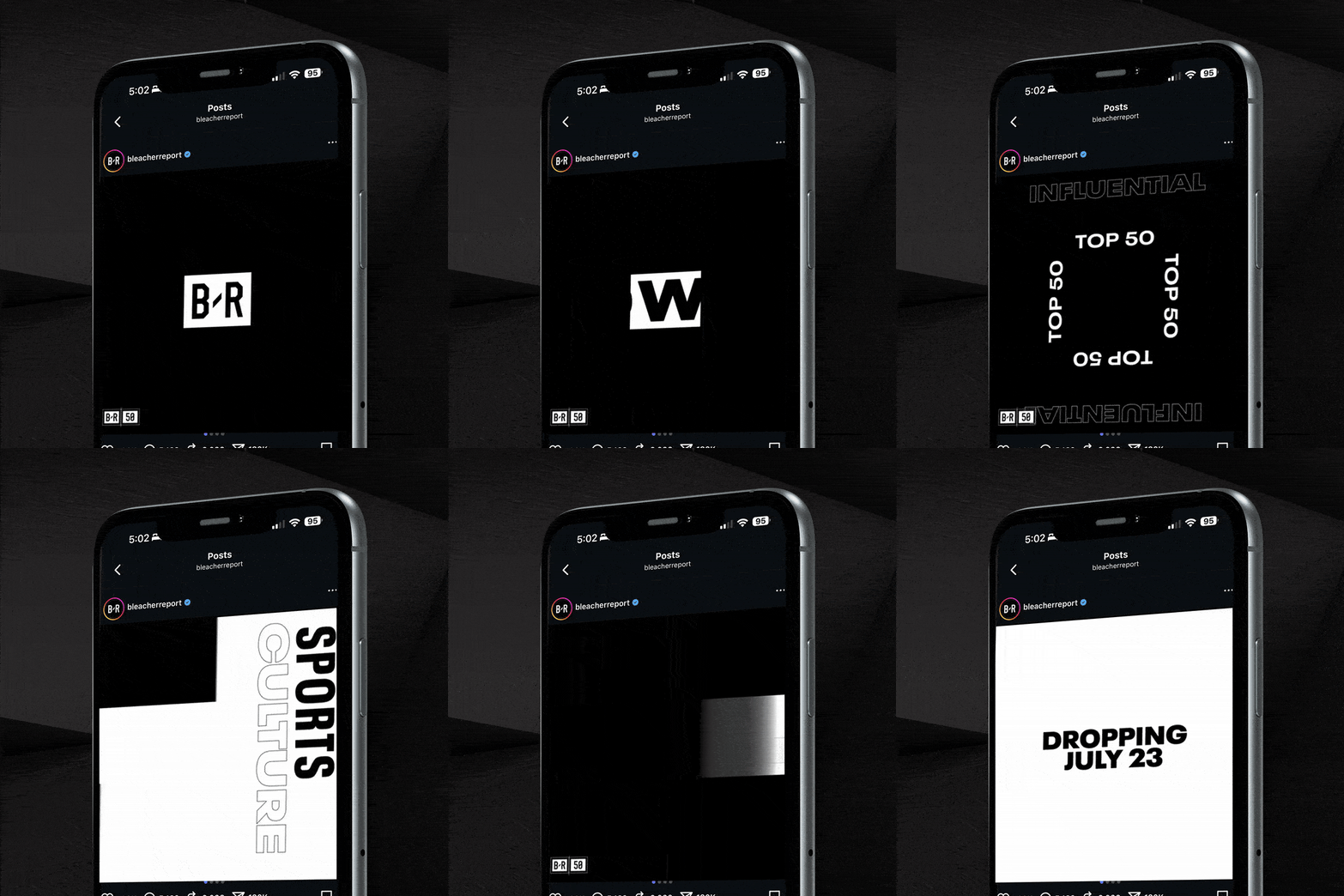






The B/R Power 50 was envisioned as Bleacher Report’s definitive statement on who truly holds influence in sports culture. Much like Time Magazine’s annual 100 list or Forbes’ Most Powerful rankings, this project was about more than status or statistics. It was about capturing a cultural moment, identifying the athletes, entertainers, and public figures who were shaping conversations both on and off the field, and presenting them in a format that carried the weight of an institution. For Bleacher Report, this was not simply content to drive clicks but an opportunity to position the brand as a cultural authority capable of framing the larger discourse around power and influence in sports.

After contributing to a number of immersive projects during my time in the Media Lab, I had a chance to work with Matt Sullivan and the BR Mag team that evolved out of our little incubator to create more engaging and interactive storytelling touch points. The BR Power 50 list was one of those major initiative where we took our newly built CMS system for long form content and our existing article format on Bleacher Report's owned and operated website, and then built a custom designed landing page for the list to truly elevate the design and visual language of this editorial initiative.

My role was central to how that framing came to life in collaboration with our creative lead Adena Jones and our BR Mag Editor in Chief Matt Sullivan. I was responsible for guiding the design direction with Dylan Lathrop, building a visual identity that matched the gravity of the editorial vision. We worked with two of my direct reports, Jessica Dorricott on Motion and Adam Powell on social graphics to elevate the launch package as well. We wanted the Power 50 to feel like a landmark, not a feature of the week, so the design needed to convey prestige and permanence. The typography, color palette, and layout choices were deliberately bold, with clear lines and commanding visuals that allowed each honoree to feel monumental. The collaboration with the editorial team reminded me of the processes behind Time’s special issues, where journalists and designers come together to create an experience that lives beyond the page.

A cornerstone of the design was our partnership with I Love Dust, the UK studio renowned for their bold illustration and 3D render work. Together we developed the signature “statue” portraits that served as the defining imagery of the project. These renderings transformed athletes and influencers into monumental figures, larger than life but still grounded in texture and realism. I worked directly with their team to ensure that each portrait carried a unique personality reflective of the individual, while also adhering to the cohesive design system we had built. The end result was a set of visuals that stood as much more than supporting imagery. They became symbolic icons that made the Power 50 feel like an institution in its own right.
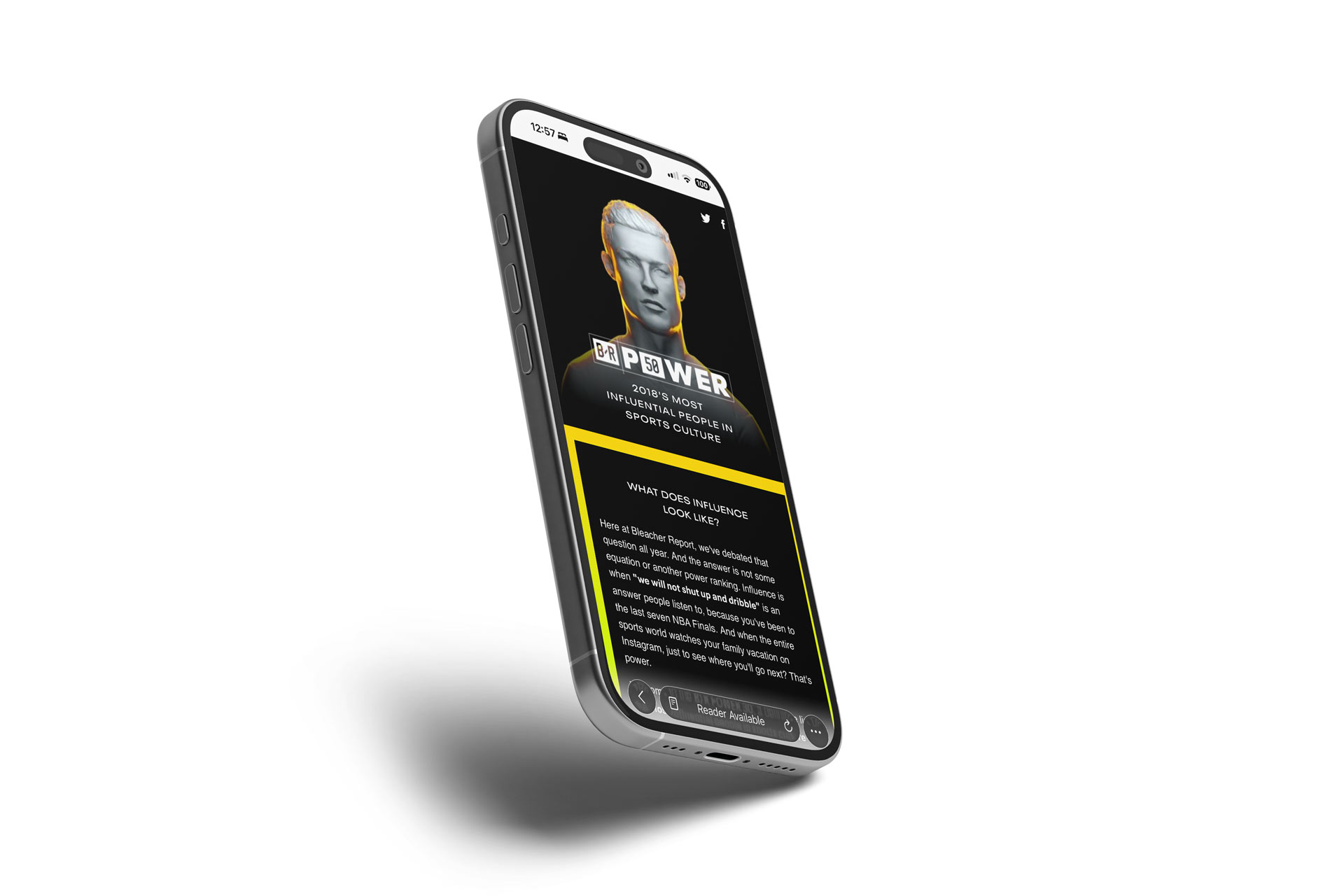
The Power 50 was also designed with mobile consumption at its core, knowing that the majority of readers would encounter the project on their phones rather than desktops. The site was optimized for vertical scrolling, making it effortless to move between categories while still feeling the weight of the storytelling. Micro interactions, responsive typography, and modular layouts ensured that the experience felt as natural as an Instagram feed yet carried the depth of a magazine feature. This focus on mobile behavior recognized the way sports fans actually consume culture in the digital era, on the go, in quick bursts, and often through social shares. By marrying long form journalism with snackable navigation, the project lived in the habits of its audience without sacrificing ambition, proving that serious storytelling could thrive in a mobile first environment.
The editorial effort was equally important. More than thirty writers and editors contributed profiles, essays, and feature stories that gave dimension to each honoree. My responsibility was to build design systems that honored those words, presenting longform writing in a way that felt approachable and inviting on both desktop and mobile. I designed the templates, page structures, and interactive features that created rhythm between heavy text and bold visuals, ensuring readers could engage deeply without being overwhelmed. Like Forbes or Fortune list features, the Power 50 demanded a balance between quick scannability and in-depth reading, and the design choices reflected that dual need.
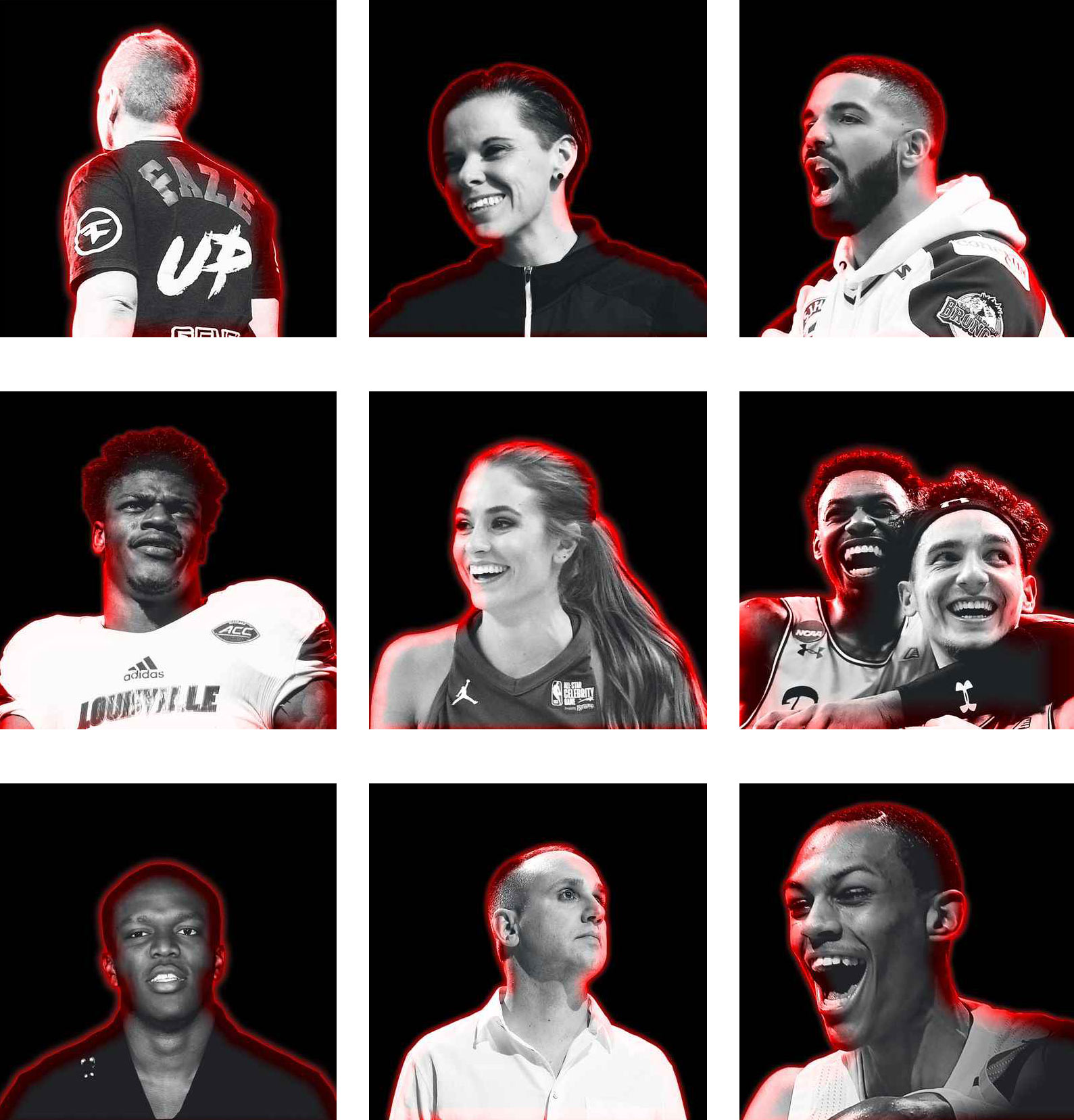
The “Shake It Up” category, wrapped in red, drew from the color’s long-standing association with disruption, urgency, and defiance. Red was the natural choice for those who thrived on rewriting the rules. Meek Mill, voicing his truth from prison, became a cultural symbol of resilience. FaZe Clan blurred the line between gaming and traditional sports, Katie Sowers broke new ground in NFL coaching, and Drake shifted sneaker culture in seismic ways. Lamar Jackson redefined negotiation on his own terms, Rachel DeMita became a face of sports gaming, UMBC owned the ultimate underdog moment, KSI forced YouTubers into the sports spotlight, Michael Rubin leveraged ownership for justice reform, and Darius Bazley shocked the system by choosing the G League over college.
One of the most complex challenges was scalability. With fifty distinct profiles, dozens of longform essays, and accompanying multimedia, the system needed to be both flexible and unified. I led the prototyping phases, working through multiple iterations of grids, card structures, and navigation systems to guarantee that each story had room to breathe without breaking from the larger visual whole. The renders from I Love Dust had to work in everything from hero placements to thumbnails, which required consistent coordination and asset testing. My role was to bridge the artistic ambition with the technical execution, ensuring the experience was beautiful but also seamless. I also helped with social packaging and copywriting to ensure everything had the same tone and voice to match the design language.
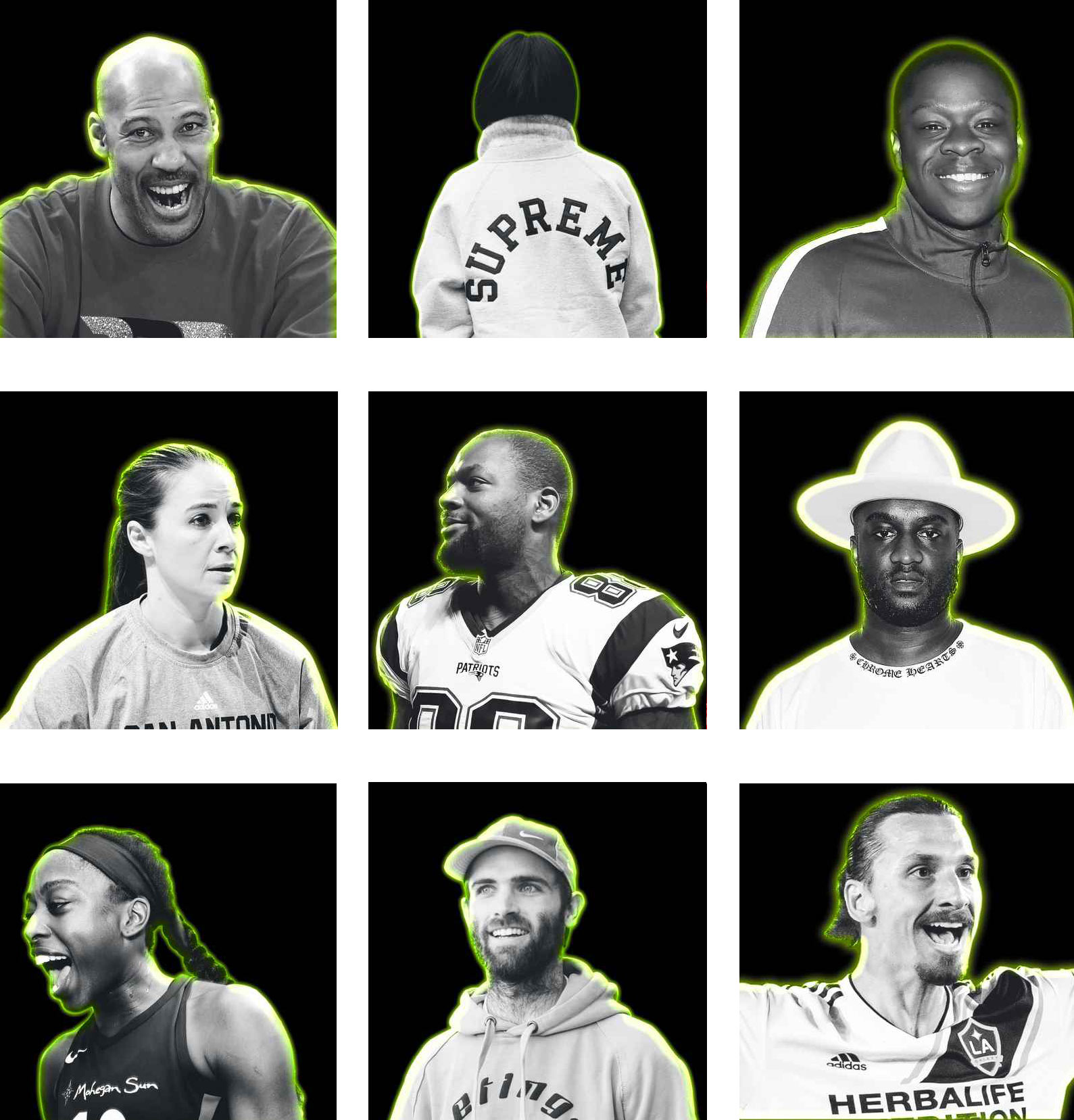
The “Boss Up” category, expressed in green, was chosen for its connotations of growth, ambition, and wealth. These were the figures who seized control of their narratives and futures. Jimmy Garoppolo stepped out from Tom Brady’s shadow to secure his fortune, Becky Hammon stood at the threshold of shattering the NBA’s coaching barrier, and Virgil Abloh bridged streetwear and high fashion. Supreme’s box logo became a cultural currency, Martellus Bennett turned retirement into creative entrepreneurship, Sean Wotherspoon reinvented sneaker culture, and Zlatan Ibrahimović brought bravado to MLS. Chiney Ogwumike thrived as both athlete and broadcaster, Filayyyy gave highlights a soundtrack, and LaVar Ball remained a spectacle of his own making.
The Power 50 was not meant to live only on the microsite. From the beginning I treated it as a brand in itself, one that needed presence across platforms. I oversaw the design and direction of the marketing rollouts with Dylan Lathrop, Adam Powell and Jessica Dorricott, which included teaser graphics, motion trailers, and social cutdowns. Every touchpoint, from an Instagram teaser to a Twitter quote card, carried the same DNA. The portraits and typography created instant recognition, much like the cover reveal of a Time special issue. This cross-platform consistency was crucial in cementing the Power 50’s presence in cultural conversations and extending its reach far beyond Bleacher Report’s owned channels.
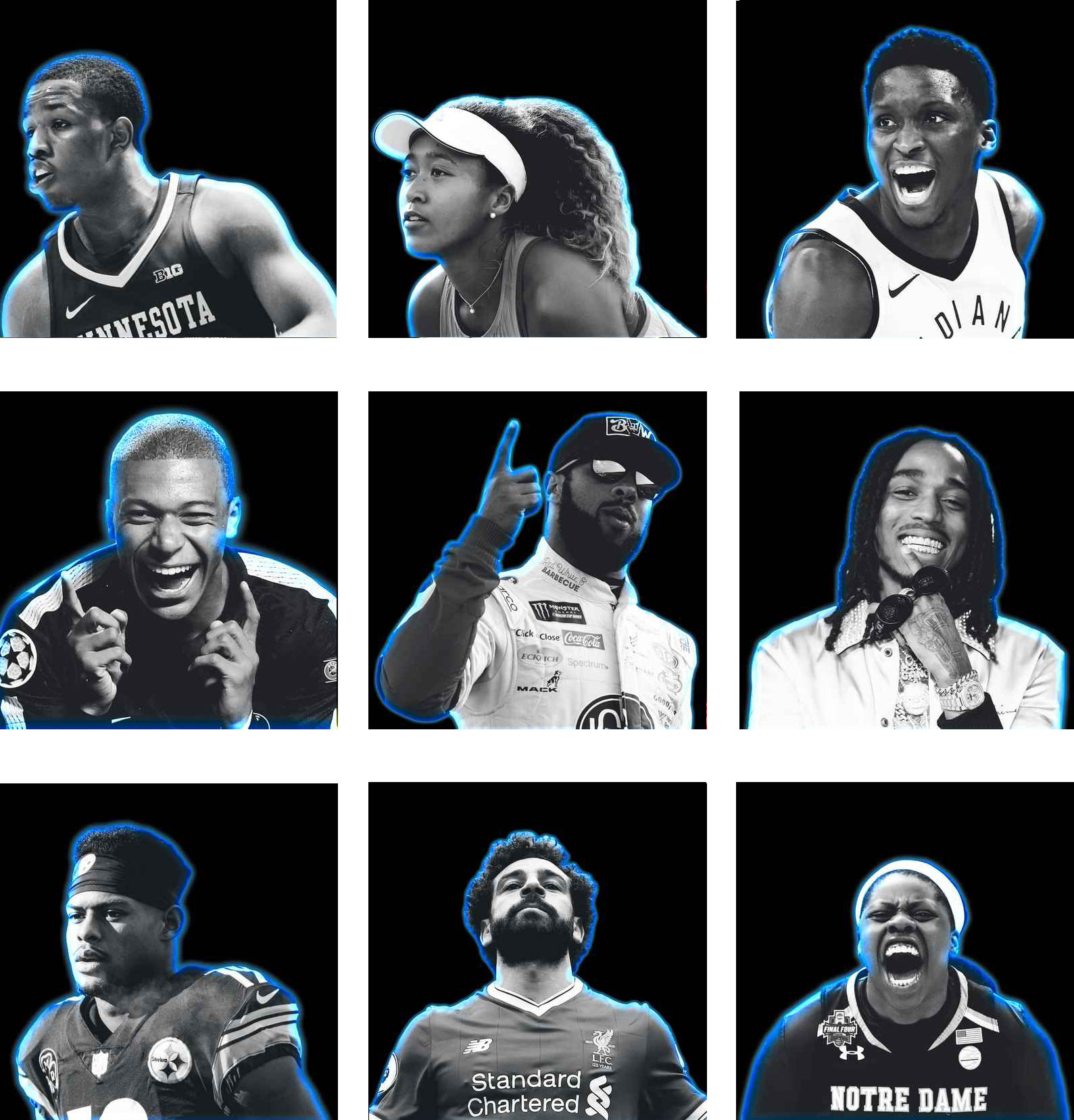
The “Glow Up” category, designed in blue, reflected emergence, youth, and the spark of new cultural imagination. Blue conveyed the clarity and freshness of stars ascending before our eyes. Donovan Mitchell turned rookie energy into leadership, JuJu Smith-Schuster built a brand on humor and relatability, and Mohamed Salah’s humility magnified his global reach. Jelly Fam transformed a streetball style into a movement, Victor Oladipo reinvented himself through both sport and music, and Arike Ogunbowale delivered under the brightest lights. Kylian Mbappé became a generational World Cup icon, Quavo bridged music and hoops with ease, Naomi Osaka redefined tennis on her terms, and Bubba Wallace forced NASCAR to reckon with race and representation.
Working closely with journalists and editors was another highlight of the process. Each writer brought a unique perspective, whether profiling an athlete at the peak of global stardom or highlighting an emerging voice reshaping culture. My job was to collaborate with them to determine how stories would be introduced, excerpted, and visually supported. I designed quote treatments, pull-out callouts, and interactive overlays that elevated the words without distracting from them. It was a true partnership between design and journalism, creating a product that carried both credibility and visual impact.
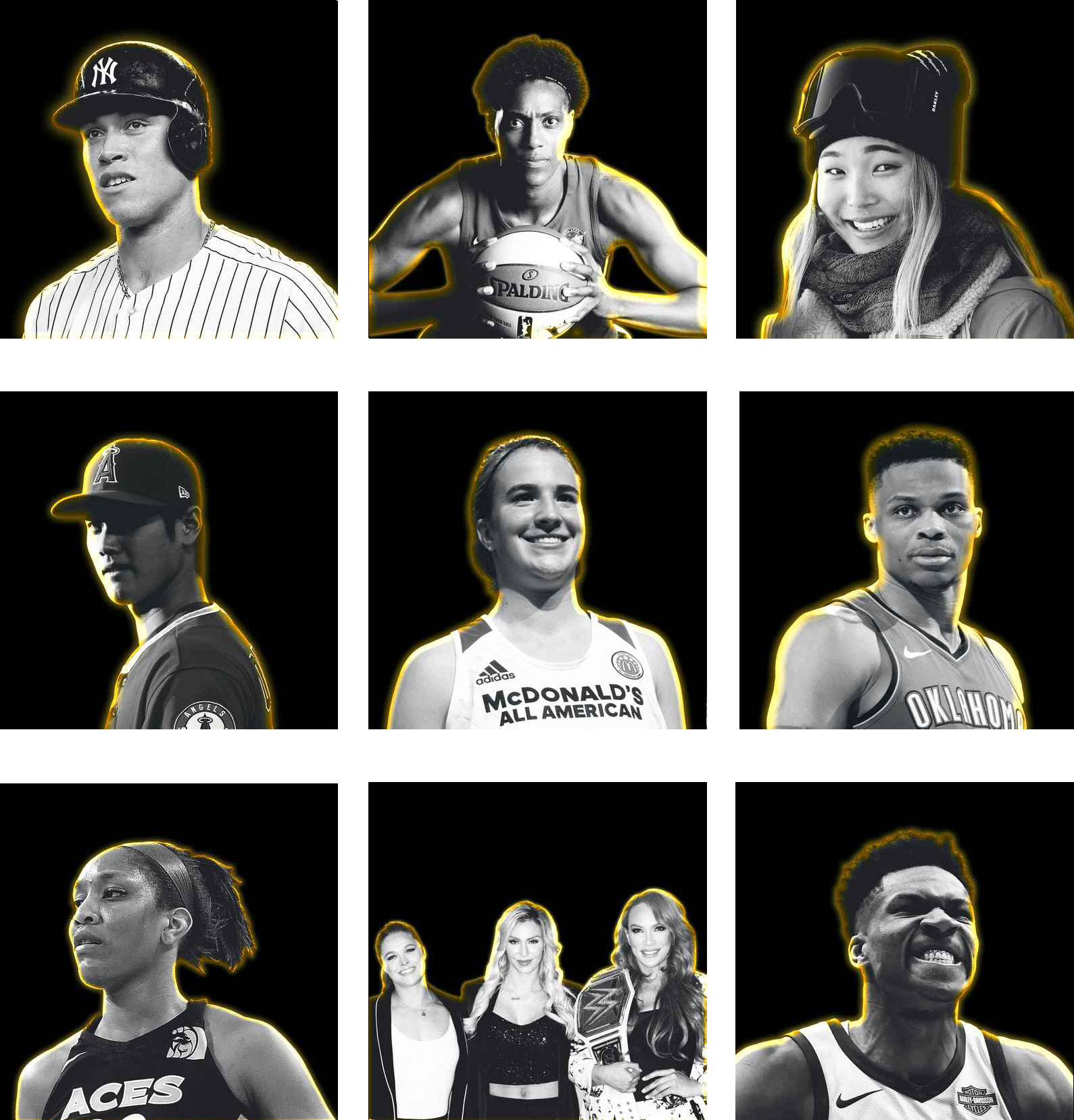
The “Level Up” category, marked in gold, symbolized achievement, excellence, and legacy. Gold framed the athletes who defined peak performance and cultural relevance. Cristiano Ronaldo was cast as soccer’s Jordan, Giannis Antetokounmpo rose into superstardom while retaining humility, and Chloe Kim brought youthful brilliance to the Olympic stage. WWE’s women spearheaded a televised revolution, A’ja Wilson stood as the WNBA’s next great leader, and Sylvia Fowles dominated with elegance and strength. Aaron Judge modernized baseball’s image, Shohei Ohtani made the impossible real by excelling at both pitching and hitting, Russell Westbrook embodied uncompromising individuality, and Sabrina Ionescu redefined collegiate excellence.
The reception of the Power 50 reflected the ambition behind it. It became a talking point across sports and culture media, generating debate and discussion much like the Time 100 does each year. Fans debated who belonged, who was left out, and why certain figures ranked where they did. The design and visuals gave that debate a sense of theater. When people shared the render portraits or screenshots of the list, they were not only talking about the honorees but also amplifying the brand identity of Bleacher Report as the arbiter of cultural power in sports.
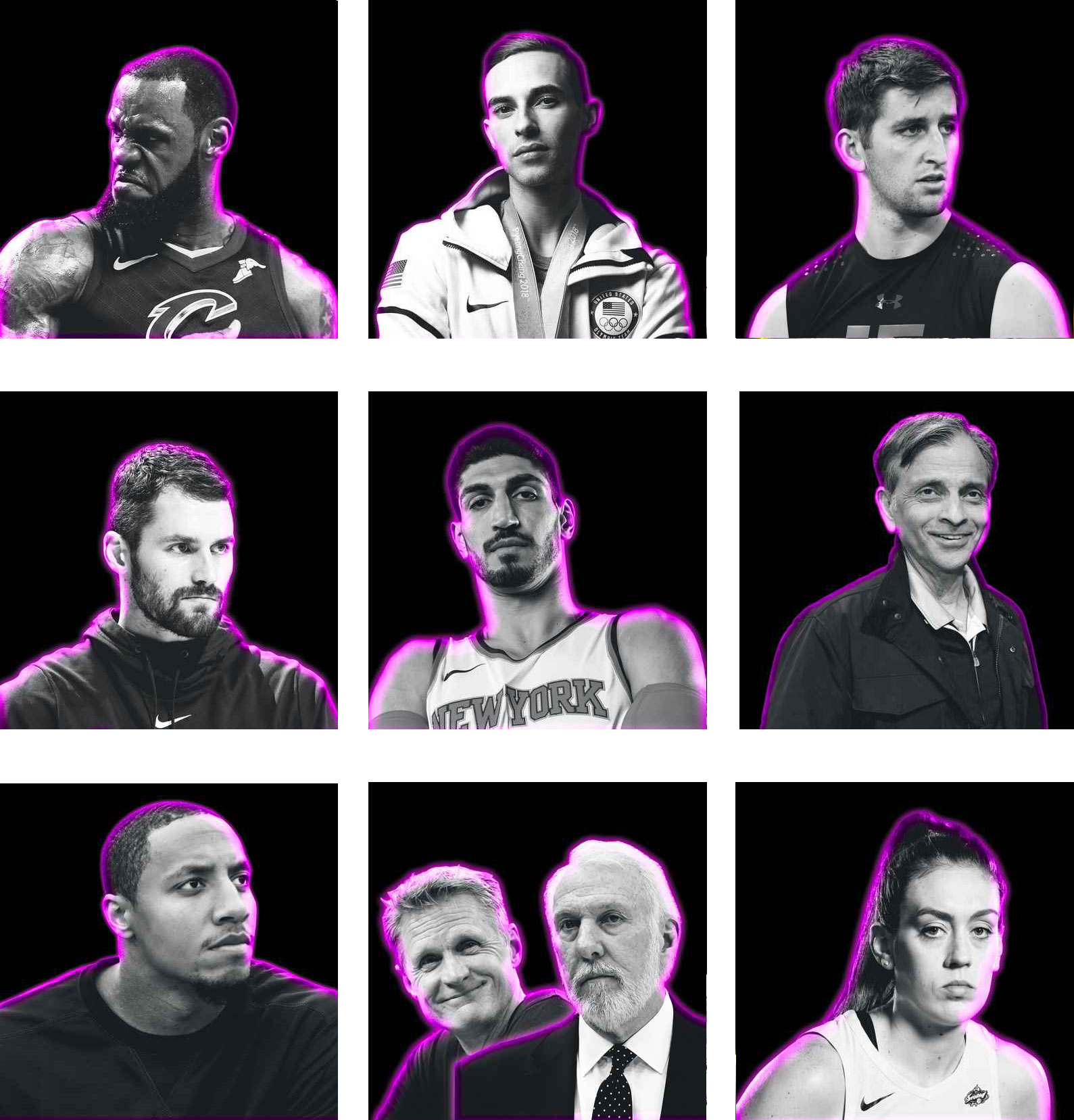
The “Speak Up” category, shaded in pink, was intentional for its cultural ties to compassion, humanity, and vulnerability. These were the voices that refused to remain silent. Aly Raisman stood as a beacon of survival and accountability, LeBron James pushed beyond basketball into politics and culture, and Eric Reid carried forward Colin Kaepernick’s protest. Gregg Popovich and Steve Kerr used their platforms for unflinching honesty, Adam Rippon fused sport and identity on the Olympic stage, and Kevin Love reframed mental health conversations. Breanna Stewart elevated #MeToo within sports, Josh Rosen demanded fairness for student-athletes, Vivek Ranadivé united Sacramento in grief, and Enes Kanter risked exile to speak against authoritarianism.
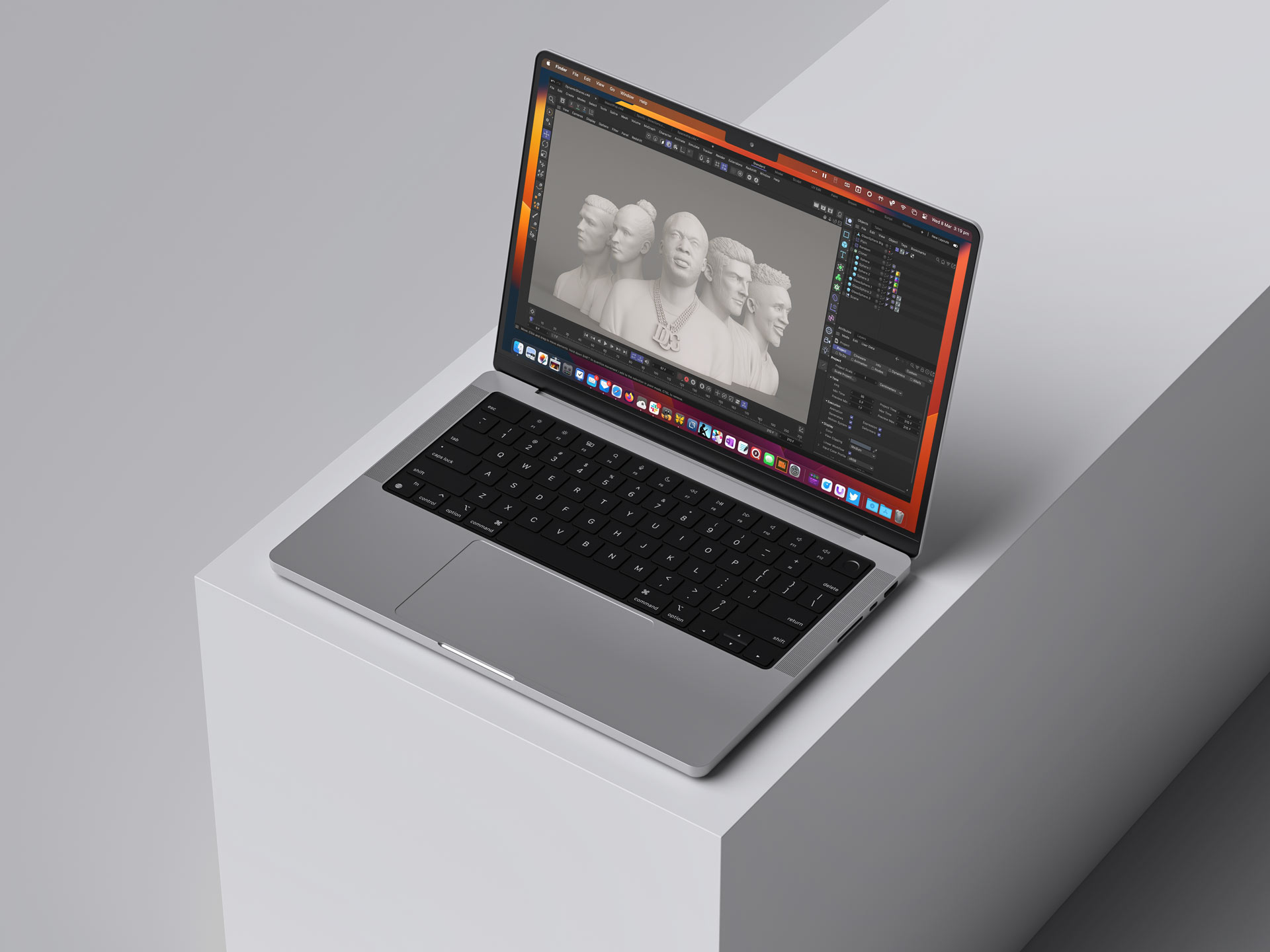
From a design perspective, the Power 50 became a model for how Bleacher Report could approach prestige editorial in the digital age. It proved that a sports media brand could create a list that carried the authority of traditional institutions like Forbes or Time while leveraging digital storytelling techniques to make it interactive, social, and accessible. The project showed that strong design direction, paired with editorial credibility, can transform a piece of content into a cultural event.
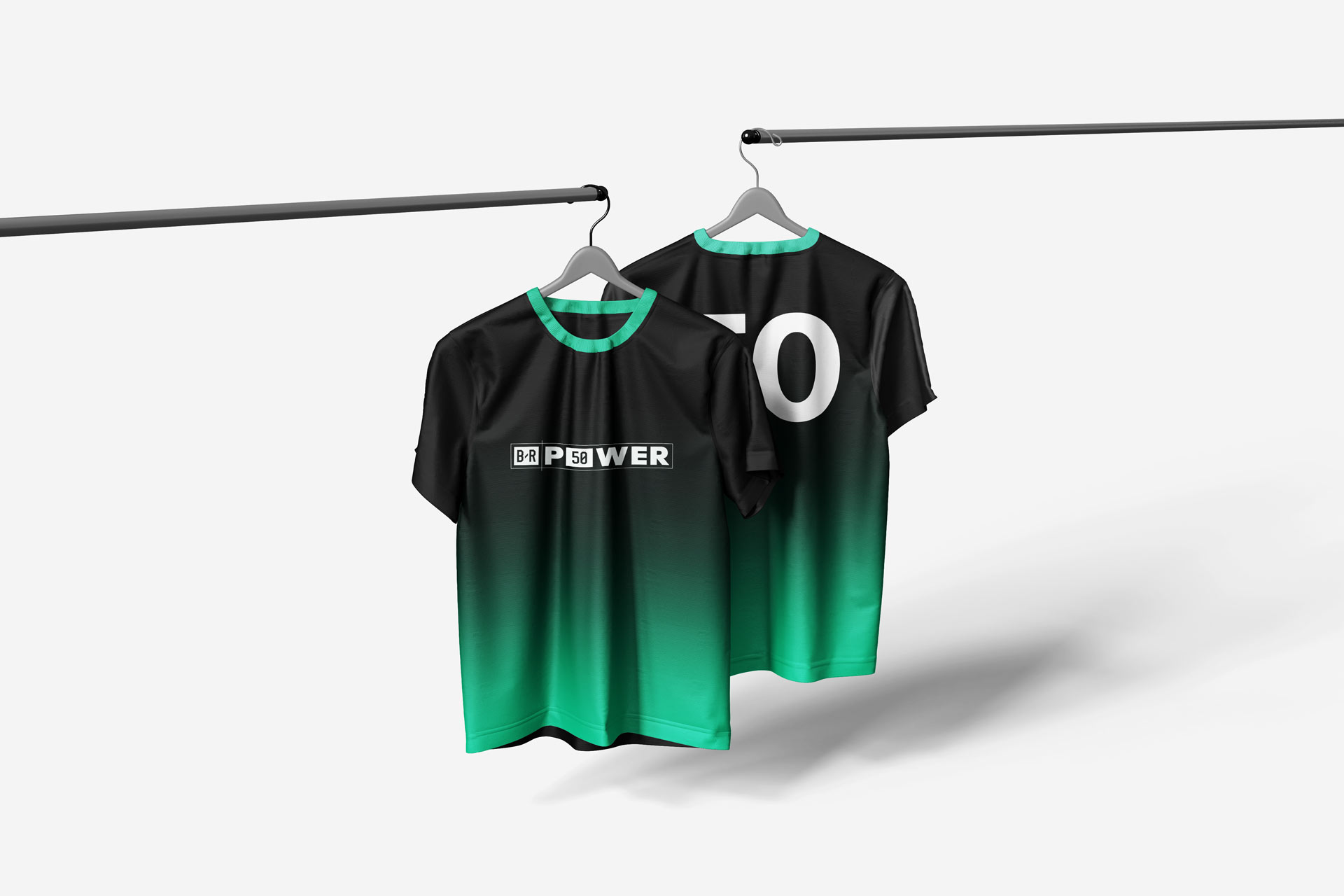
Looking back, my contributions to the Power 50 sit at the intersection of design, strategy, and culture. By guiding the creative vision, partnering with world-class illustrators like I Love Dust, and working hand-in-hand with a large team of journalists, I helped shape a project that elevated Bleacher Report’s brand identity. The Power 50 was not only a showcase of influence in sports culture but also an example of how design and storytelling together can define influence in media. It was more than a list. It was a declaration of who moves culture, and a statement that Bleacher Report has the authority to frame that conversation.
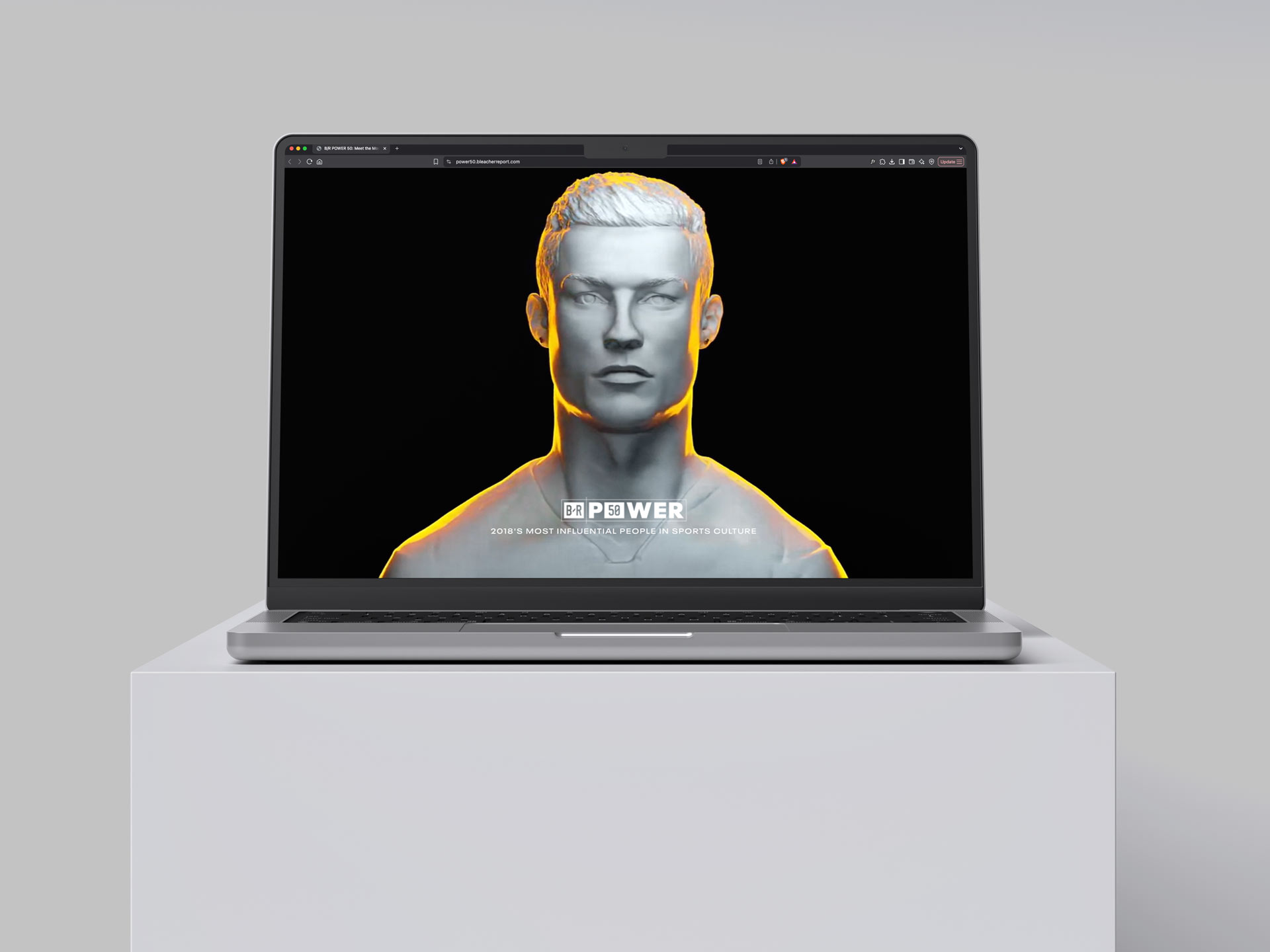
The B/R Power 50 was more than a list, it was a cultural declaration that demanded the weight of a tentpole project. Bringing together 39 writers, 16 editors, 6 designers, and thousands of hours of collaboration, the project was an immense creative undertaking that blurred the lines between journalism, design, and cultural storytelling. It was structured not simply as content but as an experience that could live across platforms and spark debate at the intersection of sports, music, fashion, and activism. Every word and every visual had to hold its own, carrying the energy of 47,000 words and 12 original videos while being accessible enough to live in a swipe or a scroll. The scale of this execution was unprecedented for Bleacher Report at the time, setting a new benchmark for what digital sports media could accomplish when editorial vision and design ambition moved in sync.
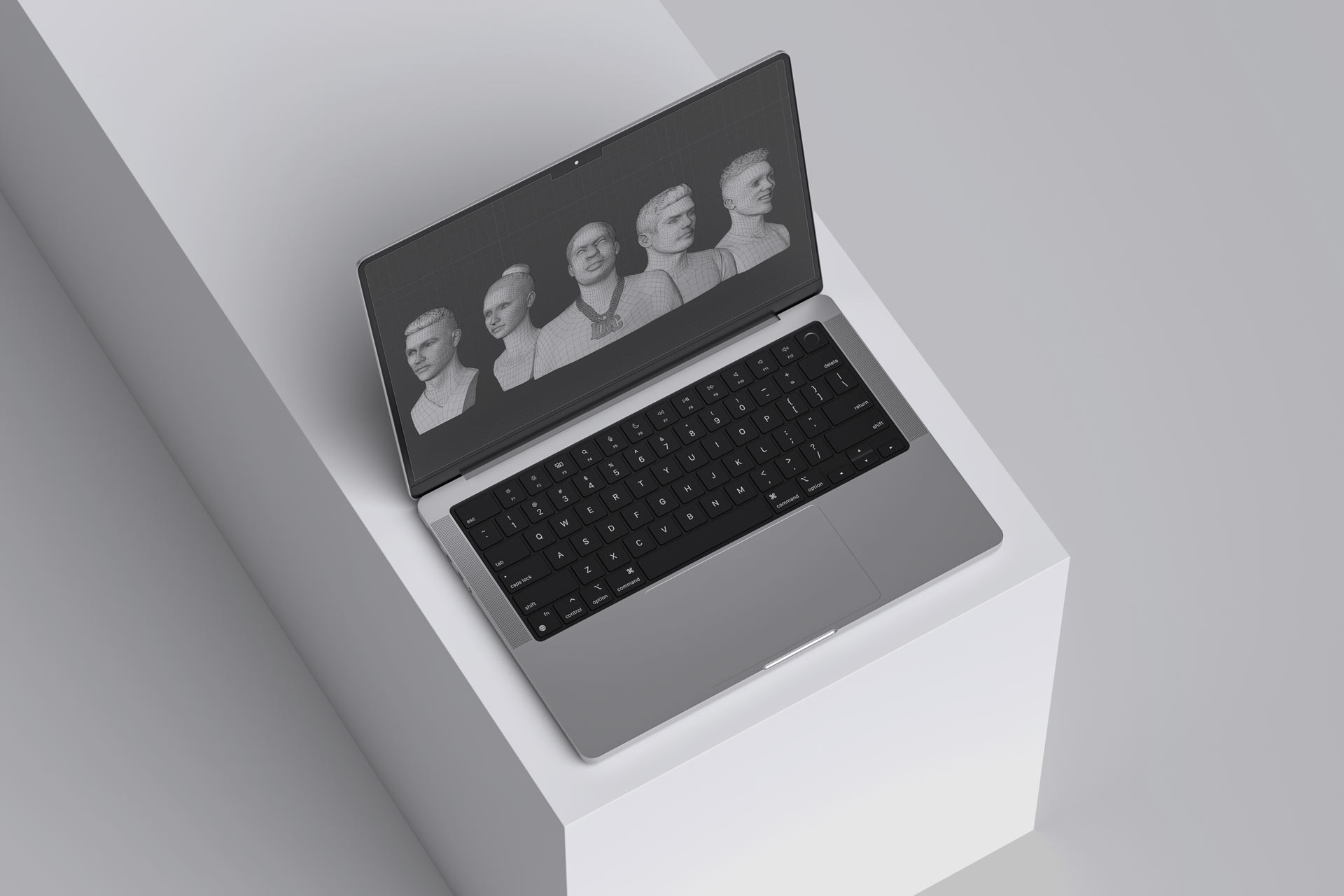
The design language became as important to the storytelling as the words themselves. Each category was defined by its own color choice rooted in deliberate theory: green for Boss Up symbolizing ambition and growth, red for Shake It Up carrying urgency and disruption, gold for Level Up evoking achievement and excellence, pink for Speak Up representing voice and empathy, and blue for Glow Up embodying freshness and arrival. These choices weren’t superficial accents but narrative signals that gave readers an emotional entry point into each theme. Combined with bold and brash typography that felt unignorable on any screen, and 3D-rendered busts created in collaboration with I Love Dust that elevated the list into a gallery-like presentation, the visuals matched the scale of the writing. The typography shouted while the renders embodied permanence, and together with the color theory they gave the Power 50 a voice and a face that was unmistakably alive.
Key Collaborators: Adena Jones, Dylan Lathrop, ILOVEDUST, Ian Blair, Jacob Bourne, Tyler Collison, Tim Coughlin, Allyson Daniels, Bill Eichenberger, Kelly Hayes, Jake Leonard, Cole Louison, Mosang Miles, Erica Patten, Matt Sullivan, Christina Tapper, Mike Taylor, Bryan Toporek, Jessica Dorricott, Ishaan Mishra, Adam Powell, Jacky Myint, Jozen Cummings, Travis Hunter, Jeff Johnson, Martell Pegues, Elliott Pohnl, Eric Yeboah, Karrie Cornell, Joon Lee, Roxane Gay, Jasmine Sanders, Russ Bengtson, Michael Bennett, Hanif Abdurraqib, Rosalyn Gold-Onwude, Dragonfly Jonez, Michael Arceneaux, Rembert Browne, Brian Mazique, Jackie Bamberger, Giancarlo Ferrari King, Mike Freeman, Zachary Seidel, Max Rappaport, David Gardner, Steve Nash, Nathaniel Friedman, Dave Schilling, Natalie Weiner, Laureen Irat, Scott Miller, Jonathan Abrams, Shana Renee, Mirin Fader, Cord Jefferson, Jamilah Lemieux, Howard Beck, Brandon Sneed, Tarana Burke, Chris Simms, Yaron Weitzman, Master Tesfatsion, Sam Behrens, Khalid Salim, Tom Haberstroh, Paulana L. Lamonier, Kiese Laymon
Tools: Adobe Illustrator, Adobe Photoshop, Adobe After Effects, Final Cut Pro
Deliverables: Design Guidelines, Video Features, Social Packaging
Category: Creative Direction, Copywriting, Journalism